<?xml version="1.0" encoding="utf-8"?><feed xmlns="http://www.w3.org/2005/Atom" ><generator uri="https://jekyllrb.com/" version="4.3.4">Jekyll</generator><link href="http://localhost:4000/essays-and-talks/feed.xml" rel="self" type="application/atom+xml" /><link href="http://localhost:4000/essays-and-talks/" rel="alternate" type="text/html" /><updated>2026-03-10T10:49:22-04:00</updated><id>http://localhost:4000/essays-and-talks/feed.xml</id><title type="html">Essays and Talks</title><subtitle>Essays (blog posts) and talks by Max Eckard, Associate Director for Curation at the Bentley Historical Library</subtitle><entry><title type="html">Jonah as Story (Sermon on Jonah [Excerpts])</title><link href="http://localhost:4000/essays-and-talks/talks/sermon-on-jonah/" rel="alternate" type="text/html" title="Jonah as Story (Sermon on Jonah [Excerpts])" /><published>2026-03-08T00:00:00-05:00</published><updated>2026-03-08T00:00:00-05:00</updated><id>http://localhost:4000/essays-and-talks/talks/sermon-on-jonah</id><content type="html" xml:base="http://localhost:4000/essays-and-talks/talks/sermon-on-jonah/"><![CDATA[<p><img src="/essays-and-talks/assets/2026-03-08-sermon-on-jonah/bigFish.png" alt="The Big Fish" /></p>

<p>On Sunday, March 8, 2026, I gave a mini-sermon at Shalom Community Church. This is an adaptation of the mini-sermon. <a href="https://shalomcc.org/jonah-as-story/">Here is an audio version.</a></p>

<hr />

<h2 id="scripture">Scripture</h2>

<p><strong>Excerpts from Jonah (The Inclusive Bible)</strong></p>

<p><em><strong>Jonah 1:1-2</strong></em>
<em>[1] The word of YHWH came to Jonah Ben-Ammitai: [2] “Get up! Go to the great city of Nineveh right now. Raise a cry against it! Tell them that I know all about their crimes.”</em></p>

<p><em><strong>Jonah 1:3</strong></em>
<em>But Jonah decided to run away from YHWH, and set out for Tarshish instead… in order to get away from YHWH.</em></p>

<p><em><strong>Jonah 2:1</strong></em>
<em>Then YHWH sent a huge fish to swallow Jonah, and he remained in the fish’s belly for three days and three nights.</em></p>

<p><em><strong>Jonah 2:11</strong></em>
<em>Then God spoke to the fish, and the fish vomited Jonah onto the shore.</em></p>

<p><em><strong>Jonah 3:1-4</strong></em>
<em>[1] The Word of YHWH came a second time to Jonah: [2] “Get up! Go to the great city of Nineveh and preach to them as I told you to do.” [3] Jonah set out and went to Nineveh in obedience to the word of YHWH… [4] …He proclaimed, “Only forty days more, and Nineveh is going to be destroyed!”</em></p>

<p><em><strong>Jonah 3:5</strong></em> 
<em>So the people of Nineveh believed God; they proclaimed a fast and dressed in sackcloth, from the greatest to the least.</em></p>

<p><em><strong>Jonah 3:10</strong></em>
<em>God saw their efforts to renounce their evil behavior. And God relented by not inflicting on them the disaster that threatened them.</em></p>

<p><em><strong>Jonah 4:1</strong></em>
<em>But Jonah grew indignant and fell into a rage.</em></p>

<p><em><strong>Jonah 4:10-11</strong></em>
<em>[10] God replied… [11] …Is it not right, then, for me to feel sorrow for the great city of Nineveh, in which there are more than 120,000 people who cannot tell their right hand from their left, to say nothing of all the animals?”</em></p>

<h2 id="poem">Poem</h2>

<p><em>Book of Mercy</em> “I,8”
By Leonard Cohen</p>

<p>In the eyes of men he falls, and in his own eyes too. He falls from his 
high place, he
trips on his achievement. He falls to you. He falls to know you. It is
sad, they say. See
his disgrace, say the ones at his heel. But he falls radiantly toward the
light to which 
he falls. They cannot see who lifts him as he falls, or how his falling
changes, and he
himself bewildered till his heart cries out to bless the one who holds
him in his
falling. And in his fall he hears his heart cry out, his heart explains
why he is falling,
why he had to fall, and he gives over the fall. Blessed are you, clasp
of falling. He 
falls into the sky, he falls into the light, none can hurt him as he falls.
Blessed are
you, shield of falling. Wrapped in his fall, concealed within his fall, he
finds his 
place, he is gathered in. While his hair streams back and his clothes
tear in the wind,
he is held up, comforted, he enters into the place of his fall. Blessed
are you, embrace
of the falling, foundation of the light, master of the human accident.</p>

<h2 id="reflection">Reflection</h2>

<p>A few years ago, my friend–my best friend–came to visit. He and I go way back: we went to the same high school and then lived together throughout college and for several more years before I started living with Ashley, which… worked out for me but he has some FEELINGS about.</p>

<p>He’d never been to our house here, so I was showing him around. We lingered a bit at our bookshelves. He reminded me that he and I shared bookshelves long before Ashley and I shared bookshelves, and actually I still have this hollow book that contains our very old, very elaborate plans to take over the world.</p>

<p>I was telling him how I have my books organized: carefully divided with fiction on the left and non-fiction on the right; philosophy, religion, karate, cooking, all neatly categorized. And he appreciates this. I’m an archivist; it’s very “on brand” for me. Except, he gives me this playful look: “You know, the Bible is in the wrong spot,” he said. “It belongs in fiction.” (Which is very on brand for him!)</p>

<p>And I thought about that comment as I reread Jonah, because it’s so fantastical and there’s so much debate about its historicity and especially genre (Is it prophecy, parable, proto-satire?). In the end, I don’t know that it really matters. “Fixating on whether or not [the story] really happened means sacrificing a far more important conversation about the nature of God, and how humans should interact with one another.”<sup id="fnref:1"><a href="#fn:1" class="footnote" rel="footnote" role="doc-noteref">1</a></sup></p>

<h3 id="jonah-is-weird">Jonah is Weird</h3>

<p>Jonah is a “minor” prophet. Which isn’t a judgment, it just means it’s short.<sup id="fnref:2"><a href="#fn:2" class="footnote" rel="footnote" role="doc-noteref">2</a></sup> And while it starts out like other prophetic texts–“Now the word of the Lord came to Jonah son of Amittai, saying…” (v. 1)–that’s where its similarities end. Most other books of prophecy–major or minor–detail the words <em>of</em> prophets, whereas Jonah, with the exception of five words in the original Hebrew, “is a story <em>about</em> a prophet.”<sup id="fnref:3"><a href="#fn:3" class="footnote" rel="footnote" role="doc-noteref">3</a></sup></p>

<p>It’s also unusual because, unlike most prophets who speak <em>to</em> Israel, Jonah is sent <em>to</em> the Ninevites, not just foreigners but historical enemies. Given the themes–the destruction (or not) of Nineveh, ambivalence toward foreigners, the tension between God’s justice and God’s mercy–it was likely a post-exilic text, maybe a generation or two after the HISTORICAL Nineveh, the capital of Assyrian Empire, was ACTUALLY destroyed IRL (even though in the story it’s spared). Israel was “back,” although not all of them returned and the ones who did faced many challenges, among them opposition from local enemies. You can see why a story like Jonah might have spoken to a people in that situation. Certainly everyone involved was still haunted by the trauma of the absolutely brutal Assyrians.</p>

<p>Jonah was written, then, in a season of “grumbling,” as in the Exodus story: Israel was back in the land (but not really), was delivered (but not really), forgave their enemies for sacking them (but not really).<sup id="fnref:4"><a href="#fn:4" class="footnote" rel="footnote" role="doc-noteref">4</a></sup> In some ways, it feels a lot like the present moment. There are glimmers of hope: ICE is out of Minnesota; there is peace in Gaza; Iran has been liberated (…BUT NOT REALLY).</p>

<p>And just like in its own unsettling period, Jonah challenges us to “reimagine a God bigger than one [we] are familiar with.”<sup id="fnref:5"><a href="#fn:5" class="footnote" rel="footnote" role="doc-noteref">5</a></sup></p>

<h3 id="the-big-fish-and-the-big-picture">The Big Fish and The Big Picture</h3>

<p>And yes, there’s a big fish. And it’s fun to speculate about WHAT KIND of fish it might have been and WHEN exactly it swallowed Jonah and WHAT IT WAS LIKE to be in there… even what gender the fish was! (The answer to that last one, at least according to the grammatical gender in the original Hebrew, is male THEN female… an interesting little fact that interpreters had a field day with!)<sup id="fnref:6"><a href="#fn:6" class="footnote" rel="footnote" role="doc-noteref">6</a></sup> But, really, we just don’t know.</p>

<p>The Bible has this habit of commemorating important events with a poem or prayer (think Miriam’s Song after crossing the Red Sea or Mary’s Magnificat in Luke 1). These passages all follow the same pattern: “they narrate the event in somewhat straightforward prose and then they drop in a poem that describes the event using more evocative and emotive language.”</p>

<p>With Jonah, though, we mostly get the opposite: he gives us the evocative and emotive poem–you can see it aligned differently in the text–but not the straightforward prose. “Readers are left to reconstruct what exactly happened to Jonah and the big fish based on several lines filled with allusions, notoriously difficult language, and vacillations between mystical and physical scenes.”<sup id="fnref:7"><a href="#fn:7" class="footnote" rel="footnote" role="doc-noteref">7</a></sup> Like Anita said the other week: allegory.</p>

<p>The big fish, it turns out, isn’t even MENTIONED in the poem of Chapter 2, where Jonah has gone down, down, down and “bottomed out”–not a big fish, but–in Sheol, the “Deep” or the Underworld. The big fish makes for a good children’s story, or bulletin cover art. And it’s central to Jonah’s <em>plot</em>, but not to Jonah’s <em>theology</em>, which seems to be something like: If you want to have spiritual clarity or transformation, you can’t be a “beautiful soul,” above it all. You may have to go down, first–to The Bottom of the Deep Blue Sea,<sup id="fnref:8"><a href="#fn:8" class="footnote" rel="footnote" role="doc-noteref">8</a></sup> down even to the belly (or womb!) of Sheol–before you can be reborn.<sup id="fnref:9"><a href="#fn:9" class="footnote" rel="footnote" role="doc-noteref">9</a></sup></p>

<h3 id="choose-your-own-adventure">Choose Your Own Adventure</h3>

<p>There is a way–actually, a few ways–we can read Jonah like it is a straightforward story, not unlike we read Mark last year during Lent: beginning, middle, end. Moral lesson. Done. What’s interesting about Jonah, however, is that it’s actually more like a “Choose Your Own Adventure” novel, full of stopping points–each with their own kind of conflict and resolution–where you could end the story and walk away with very different takeaways.</p>

<h4 id="the-rescued-prophet">“The Rescued Prophet”</h4>

<p>Let’s say, for example, that we stopped at the end of Chapter 2. In this version of the story, Jonah flees his call, ends up in crisis, prays inside the big fish, and is rescued. We might call this telling “the OG Moby Dick” or “the Rescued Prophet” and in this reading of Jonah the central conflict is human against nature, or Jonah against the whale.<sup id="fnref:10"><a href="#fn:10" class="footnote" rel="footnote" role="doc-noteref">10</a></sup></p>

<p>For many Christians, this is THE STORY that matters: over time, Jonah’s three days in the fish’s belly came to correspond to the three days from the crucifixion to the resurrection. The big fish became a symbol for Christ’s tomb, “and Jonah’s reemergence from its belly was a foreshadowing of what gets told in the New Testament about the resurrection.”<sup id="fnref:11"><a href="#fn:11" class="footnote" rel="footnote" role="doc-noteref">11</a></sup> Jesus himself mentions this tradition in Matthew 12 in reference to the fate of the “Chosen One,” himself.</p>

<p>And this is likely the version that you grew up with. This is where a lot of illustrated children’s versions of the Bible end, for example. It’s personal; it’s really ONLY about Jonah’s private transformation. And this version is… fine. It’s SURPRISING (there’s a big fish!) but not really CONVINCING.<sup id="fnref:12"><a href="#fn:12" class="footnote" rel="footnote" role="doc-noteref">12</a></sup> The resolution is a little cliche. I already know that this version won’t preach to this congregation.</p>

<p>So, maybe it will be validating to you, like it was to me, to learn that some scholars think that Chapters 1 and 2 weren’t even in the original (which would mean that the big fish wasn’t in the original), with earlier chapters riffing off that poem and being added to “demonstrate that Jonah was an unwilling–and hence, sincere–prophet.”<sup id="fnref:13"><a href="#fn:13" class="footnote" rel="footnote" role="doc-noteref">13</a></sup> Following in the footsteps of his big brothers Moses, Isaiah, and Jeremiah, those… ahem… MAJOR prophets that I like to imagine Jonah had a kind of complex about.</p>

<h4 id="mission-accomplished">“Mission Accomplished!”</h4>

<p>OK. Let’s say we stopped at Chapter 3. In this version of the story, Jonah (reluctantly) goes to Nineveh and announces that the city is doomed: “Forty days from now and Nineveh will be overthrown” (Jonah 3:4). That is his big prophecy and–contrary to all expectations–he is taken seriously! The king and all his subjects and animals put on sackcloth and ashes, they fast, and they repent. (This is why, BTW, why Jonah is read on Yom Kippur, the Jewish Day of Atonement… even if, like Madi said, it’s a little ironic because the pagan sailors and Ninevites were actually better at repenting than Jonah). And… It works! God changes God’s mind–this is also part of Jonah’s theology, and it is good news–reverses the decree, and the city is saved. This one might be called, “Mission Accomplished.”</p>

<p>In this version of the story, the conflict is more human against human, Jonah against the Ninevites. Jesus actually references this version of the story in Matthew 12, too, praising the Ninevites for repenting, even as a MODEL of repentance that will condemn his own unbelieving generation at the judgment.</p>

<p>I think this version is SURPRISING, in its own way. It would be like activism that works. If Target or Enterprise, for example, just stopped allowing immigration enforcement actions on store property after single protests there.</p>

<p>I don’t know that it would have been CONVINCING, though, especially to contemporary listeners who would have just seen the fall of the Assyrian Empire and the destruction of the historical Nineveh… and, let’s be honest, who would probably have been pretty happy about it. I can just imagine contemporary listeners hearing Jonah and thinking, “that sound like a nice sentiment… good thing we don’t have to worry about it!”</p>

<p>It’s interesting here to contrast Jonah with another minor prophet who also predicts–this time accurately–that Nineveh will be destroyed, Nahum. There, we encounter a God who is ready to wreak violence against God’s enemies. “Nineveh has been devastated!” it reads, “Who will lament for her?” (Nahum 3:7).</p>

<p>That’s the version, for me at least, that–while not SURPRISING–is definitely more CONVINCING, and familiar even in how we talk about our own enemies. Just think about the ways some folks–even those with whom we likely share some political allegiance–talk about Luigi Mangioni as the Patron Saint of American Healthcare, or wish that the bullet that struck Donald Trump’s right ear had been a few inches to the left. OR THE WAY PETE HEGSETH BOASTS ABOUT “punching [Iran] while they’re down” and “winning decisively, devastatingly, and without mercy.”</p>

<p>For many, and it doesn’t really matter who you are, vengeance is more believable than mercy, and thank God(!) this isn’t where Jonah’s story ends.</p>

<h4 id="gods-complicated-ending">God’s Complicated Ending</h4>

<p>If you read <em>all</em> the way to the end, you find out that Jonah doesn’t feel vindicated when Nineveh repents, but betrayed by God for not destroying them. Now that’s SURPRISING. Just look at it from Jonah’s perspective, though: Here was his one shot for his prophecy to come true, to be a REAL (major?) prophet, and God’s mercy ruins his [admittedly 0-0] track record.</p>

<p>Of course, Jonah <em>knows</em> that God is “gracious and merciful, slow to anger, abounding in steadfast love, and ready to relent from punishment” (Jonah 4:2). He says so himself! He <em>understands</em> the concern that God has at the Ninevites’ possible destruction, and the joy that God feels at their repentance. AND he is human–that’s what I like about him. He’s petty and he resents God and he has a hard time accepting mercy… especially because it makes him look bad. And so he complains. It’s what makes his character “real” and the story CONVINCING.</p>

<p>By now, the conflict has turned inward: human against God, or human against self. Jonah’s heart needs help catching up to what he already knows in his head but doesn’t want to accept. And so God teaches him a few more lessons, or tries to: saving God’s creation is more important than a prophet’s (or even God’s!) reputation; prophecy isn’t about prediction, but MAKING A NEW FUTURE, starting with education and repentance; and that God is NOT harsh…. God RELENTS. And it’s good for us to do that, too.</p>

<p>–</p>

<p>Two weeks ago, Jo reminded us that in the story of Jonah, we are both the converted prophet and the Ninevites–citizens of Empire. And how righteous anger–if we don’t “nicey nice” away from it OR become consumed by it (because it is a CAGE)–can help us name and confront our enemies. It can hold them accountable WHILE we see the way they tell the truth about us, our communities, and the histories in which our lives are embedded.<sup id="fnref:14"><a href="#fn:14" class="footnote" rel="footnote" role="doc-noteref">14</a></sup> In the end, it’s not God’s mercy (or grace) against God’s justice, God’s mercy only works if it goes hand-in-hand with justice.</p>

<p>Chapter 4 of Jonah doesn’t come to any neat conclusions. Jonah is still angry. God is still patient. And the story ends with a question from God: ‘Can’t I pity Nineveh?’ We’re left sitting in the tension, as we are right now, in this very congregation.</p>

<p>Nobody likes where we are right now as a country, as a society. And we have this energy here to do <em>something</em>, but we don’t exactly know what. Some of us want action: a clear path, with bold steps forward. Others want mercy, or grace. Some want unequivocal change; others need space to lament and doubt. And I think that IF we are going to be faithful witnesses to the Biblical testimony of Jonah and others like him, THEN we need all of that. Jonah’s conflict is our own–the ambiguity, the call, the accountability, AND the challenge to mercy.</p>

<h3 id="by-way-of-conclusion">By Way of Conclusion</h3>

<p>The question, “can’t I pity Nineveh,” never gets answered. We don’t know how Jonah responds, just as we sometimes don’t know how we will. Some of us might still be in the middle of the story somewhere! Maybe you are spiraling downward right now, or in the belly of the beast. We will walk with you there. Or maybe you just had your conversion experience. We will walk with you there. Maybe you are bitter. We will walk with you there, too.</p>

<p>Maybe… you are unapologetically a Ninevite! In which case, it’s a little weird you found yourself here, but you are welcome.</p>

<p>Being a community isn’t about always knowing which role we play, or always having pure motives. It’s about showing up–even as we wrestle with God’s question–together.</p>

<p>Amen.</p>

<div class="post-categories">
  
  
  <p style="text-alig**N:**right"><em>Categories:</em> <a href="/essays-and-talks/talks">talks</a></p>
  
  
</div>
<div class="footnotes" role="doc-endnotes">
  <ol>
    <li id="fn:1">
      <p>“How the Story of Jonah Works–A Writer Explains Jonah,” <em>How Stories Work with Jay Sherer</em> <a href="#fnref:1" class="reversefootnote" role="doc-backlink">&#8617;</a></p>
    </li>
    <li id="fn:2">
      <p>Maybe it’s like being a dwarf planet instead of a PLANET planet. We see you, Pluto. <a href="#fnref:2" class="reversefootnote" role="doc-backlink">&#8617;</a></p>
    </li>
    <li id="fn:3">
      <p><em>How to Read the Bible: A Guide to Scripture, Then and Now</em> by James Kugel (p. 630) <a href="#fnref:3" class="reversefootnote" role="doc-backlink">&#8617;</a></p>
    </li>
    <li id="fn:4">
      <p><em>The Bible for Normal People</em> (ep. 25) <a href="#fnref:4" class="reversefootnote" role="doc-backlink">&#8617;</a></p>
    </li>
    <li id="fn:5">
      <p><a href="https://thebiblefornormalpeople.com/">Don’t Put God in a Box, Unless You Want to Be Swallowed by a Fish</a> <a href="#fnref:5" class="reversefootnote" role="doc-backlink">&#8617;</a></p>
    </li>
    <li id="fn:6">
      <p>These are all things scholars have debated about, going back at least to the late 11th century Rashi. <a href="#fnref:6" class="reversefootnote" role="doc-backlink">&#8617;</a></p>
    </li>
    <li id="fn:7">
      <p><em>Jonah for Normal People: A Guide to the Most Misunderstood Prophet of the Bible</em> by Jared Byas (p. 26) <a href="#fnref:7" class="reversefootnote" role="doc-backlink">&#8617;</a></p>
    </li>
    <li id="fn:8">
      <p>“The Bottom of the Deep Blue Sea” by Missio <a href="#fnref:8" class="reversefootnote" role="doc-backlink">&#8617;</a></p>
    </li>
    <li id="fn:9">
      <p>Hegel (in <em>Phenomenology of Spirit</em>) characterized it as a “judging consciousness” that refuses to act in the “polluted” world, thereby failing to achieve true ethical reality. And THAT is good news (about the theology), I could end the sermon right there. <a href="#fnref:9" class="reversefootnote" role="doc-backlink">&#8617;</a></p>
    </li>
    <li id="fn:10">
      <p><em>The Making of a Story</em> by Alice LaPlante (p.155) <a href="#fnref:10" class="reversefootnote" role="doc-backlink">&#8617;</a></p>
    </li>
    <li id="fn:11">
      <p><em>How to Read the Bible: A Guide to Scripture, Then and Now</em> by James Kugel (p. 629) <a href="#fnref:11" class="reversefootnote" role="doc-backlink">&#8617;</a></p>
    </li>
    <li id="fn:12">
      <p><em>The Making of a Story</em> by Alice LaPlante (p. 27) <a href="#fnref:12" class="reversefootnote" role="doc-backlink">&#8617;</a></p>
    </li>
    <li id="fn:13">
      <p><em>How to Read the Bible: A Guide to Scripture, Then and Now</em> by James Kugel (p. 632) <a href="#fnref:13" class="reversefootnote" role="doc-backlink">&#8617;</a></p>
    </li>
    <li id="fn:14">
      <p><em>How to Have an Enemy</em> by Melissa Florer-Bixler <a href="#fnref:14" class="reversefootnote" role="doc-backlink">&#8617;</a></p>
    </li>
  </ol>
</div>]]></content><author><name></name></author><category term="talks" /><summary type="html"><![CDATA[]]></summary></entry><entry><title type="html">A Megachurch Full of Santas (Moth-Style StorySLAM)</title><link href="http://localhost:4000/essays-and-talks/talks/a-megachurch-full-of-santas/" rel="alternate" type="text/html" title="A Megachurch Full of Santas (Moth-Style StorySLAM)" /><published>2026-02-16T00:00:00-05:00</published><updated>2026-02-16T00:00:00-05:00</updated><id>http://localhost:4000/essays-and-talks/talks/a-megachurch-full-of-santas</id><content type="html" xml:base="http://localhost:4000/essays-and-talks/talks/a-megachurch-full-of-santas/"><![CDATA[<p>I am “taking a class” at Bethany Theological Seminary. On Tuesday, February 25, 2026, I told a story for a Moth-Style StorySLAM in class. The audio (from a practice run) is available here:</p>

<div>
    <audio controls="">
    <source src="/essays-and-talks/assets/2026-02-16-a-megachurch-full-of-santas/A Megachurch Full of Santas.m4a" type="audio/mp3" />
    Your browser does not support the audio element.
  </audio>
</div>

<p>My notes are here:</p>

<object data="/essays-and-talks/assets/2026-02-16-a-megachurch-full-of-santas/2025-02-16 -- Eckard -- A Megachurch Full of Santas.pdf" width="1000" height="1000" type="application/pdf"></object>

<div class="post-categories">
  
  
  <p style="text-alig**N:**right"><em>Categories:</em> <a href="/essays-and-talks/talks">talks</a></p>
  
  
</div>]]></content><author><name></name></author><category term="talks" /><summary type="html"><![CDATA[I am “taking a class” at Bethany Theological Seminary. On Tuesday, February 25, 2026, I told a story for a Moth-Style StorySLAM in class. The audio (from a practice run) is available here:]]></summary></entry><entry><title type="html">Angels Speak – Do Not Be Afraid (Mini-Sermon)</title><link href="http://localhost:4000/essays-and-talks/talks/mini-sermon/" rel="alternate" type="text/html" title="Angels Speak – Do Not Be Afraid (Mini-Sermon)" /><published>2025-12-14T00:00:00-05:00</published><updated>2025-12-14T00:00:00-05:00</updated><id>http://localhost:4000/essays-and-talks/talks/mini-sermon</id><content type="html" xml:base="http://localhost:4000/essays-and-talks/talks/mini-sermon/"><![CDATA[<p><img src="/essays-and-talks/assets/2025-12-14-mini-sermon/angel.png" alt="Muhammad Ali" /></p>

<p>On Sunday, December 14, 2025, I gave a mini-sermon at Shalom Community Church. This is an adaptation of the mini-sermon. <a href="https://shalomcc.org/angels-speak/">Here is an audio version.</a> It includes other mini-sermons from Jo Hatlem and Trevor Bechtel, as well as litanies and music.</p>

<hr />

<p>Eight years ago, during Advent–on Wednesday, December 20th, 2017, to be precise–I met two “angels.”<sup id="fnref:1"><a href="#fn:1" class="footnote" rel="footnote" role="doc-noteref">1</a></sup></p>

<h3 id="-wed-dec-20">&lt; Wed, Dec 20</h3>

<p>It was a “best of times, worst of times” kind of situation. Ashley and I had been trying to get pregnant, for a second time. We had Leila, but we’d always known that, if possible, we wanted two or three children. With Leila, we got pregnant pretty quick, and so we were hopeful. We were keeping track of Ashley’s cycle and had a pregnancy test ready to use that Wednesday morning.</p>

<p>I also had a close friend, from when I lived in North Carolina–a mentor, a father figure–who was in the hospital. His name was Calvin. Over Thanksgiving break, he’d gone to visit family in Maryland and he’d had a stroke, a bad one, in his brain stem. It eventually left him in a “locked in” state: he was conscious, at least intermittently, but unable to move or speak. He could only communicate by blinking his eyes.</p>

<p>He had family with him in Maryland; and some mutual friends of ours helped take care of his house in North Carolina. Meanwhile, I felt pretty useless here in Michigan, but I’d made tentative plans to go visit him over the winter break.</p>

<h3 id="wed-dec-20">Wed, Dec 20</h3>

<p>That morning–the Wednesday morning, before work–Ashley took the test, and it was positive! And we were excited! Already, our minds started racing, thinking about this new adventure we were going on, and sharing it together.</p>

<p>Perfect for a season celebrating the birth of a baby.</p>

<p>And then, right then, not 10 minutes later, I got some sad news. Calvin, my friend, had passed away. He was 56. And I was devastated. I tried to be excited about the pregnancy, even if just for Ashley’s sake. But I couldn’t. All I could do was get in the shower and cry.</p>

<h3 id="-wed-dec-20-1">&gt; Wed, Dec 20</h3>

<p>Instead of visiting him that winter break, I went to his funeral. It was open casket, and I remember he was wearing this suit, with a purple shirt and tie.<sup id="fnref:2"><a href="#fn:2" class="footnote" rel="footnote" role="doc-noteref">2</a></sup> And on the program for the funeral there was a picture of him, wearing that same suit–alive (smiling even)–but photoshopped onto a cloudy sky, with a kind of halo. It had very “heaven got another angel” or “he’s in a better place” type vibes. It was well-intentioned, and probably standard practice. But in the middle of grieving, it just made the pain worse, like I was somehow supposed to ignore the reality staring back at me. That he was gone.</p>

<p>A few weeks later, Ashley went to her initial prenatal visit, in February; she was 10 or 11 weeks pregnant by then. She was healthy, and everything seemed to be moving along just fine. And besides, we were old hands by this point. We were definitely doing that thing that Anita talked about last week: imagining what this child’s life was going to be like.</p>

<p>Except, at the appointment, when nurses “listened” for a heartbeat, they weren’t able to fine it. Neither were doctors. An ultrasound a few days later revealed that Ashley had had a miscarriage. We officially had what other people would call an “angel baby.”</p>

<p>Ashley hadn’t had any obvious symptoms that something concerning might be going on–certainly not a miscarriage–and so the whole thing was a shock. But we are problem-solvers, and jumped right into action. After a <em>missed</em> miscarriage, the doctor gives a woman options for removing the fetal tissue. Ashley had a really difficult time with this, and said recently that it was like picking which of these awful things was the LEAST awful. In the end, she just wanted to get it out as quickly as possible, and so we made an appointment to do just that a few days later. I woke up that morning, went to work (and cried in the stacks). The appointment, when it came that afternoon, was over really quick. The doctor was funny, which is a distraction technique.</p>

<p>That evening, Cinda, a Shalom friend, brought us soup.</p>

<p>In the days before and after, I remember people telling us to BE THANKFUL that we had Leila. And that we could try again. And that “actually, it’s very common.” (This kind of advice is all over the Internet.) And we WERE (thankful) and of course we KNEW all that. But, again, it was like people just didn’t want you to LOOK at the thing.</p>

<p>And so yeah, it ended up being a “worst of times, worst of times” kind of situation. And for a very long time I was convinced that nothing good was ever going to come of that day.</p>

<h3 id="i-see-words">I See Words</h3>

<p>I’ll admit that I am basically allergic to the modern, “Disneyfied” versions of angels that are often offered to us as comfort here in the West, as they were when Calvin died, and as they were when Ashley experienced a miscarriage. For the record: I don’t want them at my funeral.</p>

<p>Partly, it’s Biblical. Angels, like the ones we meet in Advent, and throughout scripture, aren’t actually all that comforting. Sometimes they are even scary. They totally UPEND individuals’ lives, and they are HERALDS of disruption and reorientation for ALL of humanity, especially for those who don’t look like us (and against those who do).</p>

<p>It’s also the way they FUNCTION in society.</p>

<p style="text-align:right;">The angel Gabriel, according to... Luke, burst into the life of an ordinary young woman[--Mary--]without permission, terrifying her." Gabriel had just done the same thing to Zechariah, so that he was "troubled and overcome with fear."</p>

<p>He even became mute… like my friend.<sup id="fnref:3"><a href="#fn:3" class="footnote" rel="footnote" role="doc-noteref">3</a></sup></p>

<p style="text-align:right;">"Every angelic appearance in scripture causes fear, because the angel mediates the SEARING INTRUSTION of the LIVING GOD..."</p>

<p>These experiences taught me that even though I act like I’m not, or hide it when I am, I am afraid. I am afraid of losing people I love. Of being alone, or left behind.<sup id="fnref:4"><a href="#fn:4" class="footnote" rel="footnote" role="doc-noteref">4</a></sup></p>

<p style="text-align:right;">Yet the angel said, "do not be afraid."</p>

<p>Maybe I really was visited by angels that season. I don’t think so. My life was changed, though, and my orientation–especially toward grief and our responsibility to ourselves and others in life’s WORST moments–in ways that I am still coming to understand.</p>

<p>But you don’t get to this hope, this reassurance to NOT to be afraid–which is not just something we hear during Advent, BTW, but something that echoes throughout scripture–by rushing ahead. Or by pretending like it’s not there. Or by relying on cheap optimism about a distant or heavenly future. Or by believing that grief can somehow–like MAGIC–be fixed, or go away.</p>

<p>You don’t–you can’t–pretend that suffering and loss don’t exist here and now when you’re looking at your friend in a coffin or trying to help your wife after a miscarriage.</p>

<h3 id="a-man-walking-with-his-girlfriend-advent-is-distracted-by-a-woman-in-a-red-dress-christmas">A Man Walking with His GirlFriend (Advent) Is Distracted By a Woman in a Red Dress (Christmas)</h3>

<p>I love Advent, but there’s a lot at stake with the promise of Advent. That a baby will be born. Not that time. That when Christ comes again, “death will be no more.”<sup id="fnref:5"><a href="#fn:5" class="footnote" rel="footnote" role="doc-noteref">5</a></sup> Not yet. This kind of thing only works if you take the LLLOOONNNGGG view. In reality, Advent is a kind of optimism, but “optimism with a broken heart.”<sup id="fnref:6"><a href="#fn:6" class="footnote" rel="footnote" role="doc-noteref">6</a></sup> There were two mass shootings yesterday. Any talk of peace, or hope, or joy… they are FRAGILE and TENTATIVE at best.</p>

<p>But the promise of Christmas is, by comparison, much simpler. One that Jo has reminded us of a few times this Advent, and one that I can get behind. That God is with us. Period. Celebrates with us, suffers with us, abides with us, through it all. And that your life can and will be transformed, like it or not.</p>

<p>Amen.</p>

<div class="post-categories">
  
  
  <p style="text-alig**N:**right"><em>Categories:</em> <a href="/essays-and-talks/talks">talks</a></p>
  
  
</div>
<div class="footnotes" role="doc-endnotes">
  <ol>
    <li id="fn:1">
      <p>A basic premise of this mini-sermon is something Steven King once said: “telling an alcoholic to control his drinking is like telling a guy suffering the world’s most cataclysmic case of diarrhea to control his shitting.” I think the same is true for telling someone who suffers from anxiety not to be anxious, or telling someone who is afraid–ahem, angels–not to be afraid. <a href="#fnref:1" class="reversefootnote" role="doc-backlink">&#8617;</a></p>
    </li>
    <li id="fn:2">
      <p>Also his hands. They were deflated, and they didn’t look like his. <a href="#fnref:2" class="reversefootnote" role="doc-backlink">&#8617;</a></p>
    </li>
    <li id="fn:3">
      <p>Bible <a href="#fnref:3" class="reversefootnote" role="doc-backlink">&#8617;</a></p>
    </li>
    <li id="fn:4">
      <p>Fleming Rutledge, <em>The Once and Future Coming of Jesus Christ</em> <a href="#fnref:4" class="reversefootnote" role="doc-backlink">&#8617;</a></p>
    </li>
    <li id="fn:5">
      <p>Bible <a href="#fnref:5" class="reversefootnote" role="doc-backlink">&#8617;</a></p>
    </li>
    <li id="fn:6">
      <p>Nick Cave <a href="#fnref:6" class="reversefootnote" role="doc-backlink">&#8617;</a></p>
    </li>
  </ol>
</div>]]></content><author><name></name></author><category term="talks" /><summary type="html"><![CDATA[]]></summary></entry><entry><title type="html">What’s My Name? (Sermon on Judges 12:5-6)</title><link href="http://localhost:4000/essays-and-talks/talks/sermon-on-judges-12-5-to-6/" rel="alternate" type="text/html" title="What’s My Name? (Sermon on Judges 12:5-6)" /><published>2025-11-09T00:00:00-05:00</published><updated>2025-11-09T00:00:00-05:00</updated><id>http://localhost:4000/essays-and-talks/talks/sermon-on-judges-12-5-to-6</id><content type="html" xml:base="http://localhost:4000/essays-and-talks/talks/sermon-on-judges-12-5-to-6/"><![CDATA[<p>On Sunday, November 9, 2025, I gave a sermon at Shalom Community Church. This is an adaptation of the sermon. <a href="https://shalomcc.org/whats-my-name/">Here is an audio version.</a></p>

<hr />

<p><img src="/essays-and-talks/assets/2025-11-09-sermon-on-judges-12-5-to-6/whenToBreakTheRule.png" alt="Muhammad Ali" /></p>

<h2 id="scripture">Scripture</h2>

<p><strong>Judges 12: 5-6 (The Inclusive Bible)</strong></p>

<p><em>[5] The Gileadites overran the fords of the Jordan near Ephraim. When the fleeing Ephraimites asked permission to cross over, the Gileadites would ask, “Are you an Ephraimite?” Whoever answered “no” [6] was asked to pronounce the words “shibboleth.” Anyone who mispronounced the word as “sibboleth” was seized and killed at the fords of the Jordan. And 42,000 Ephraimites were put to death at the time.</em></p>

<h2 id="reflection">Reflection</h2>

<p>I want to start with a secret. Clay–you know, <em>that</em> Clay–is named, in part, after Cassius Clay. Yes, <em>that</em> one: Muhammad Ali, the boxer and social activist.</p>

<p>And, yes, Muhammad Ali was amazing in the ring. BUT, that’s not what I want to talk about today. Outside xthe ring, beyond the cultural icon even, Ali was a man–a complicated one<sup id="fnref:1"><a href="#fn:1" class="footnote" rel="footnote" role="doc-noteref">1</a></sup>–who wasn’t afraid to break the rules:</p>

<ul>
  <li>He joined the Nation of Islam, for example–which yes, has a complex history.  But it led him to speak out FEARLESSLY for Black empowerment, even when it was really DANGEROUS to do so.</li>
  <li>He also refused the draft for the Vietnam War because he believed it was wrong, even though it came at great personal cost.</li>
</ul>

<p>Later, he became a humanitarian, an ambassador for peace, even lived for a while right here in Michigan.<sup id="fnref:2"><a href="#fn:2" class="footnote" rel="footnote" role="doc-noteref">2</a></sup> He had a daughter named Laila (another reason I like him) and he suffered, publicly, from Parkinson’s Disease.</p>

<p>(However you remember him, he’d want you to remember him as “the Greatest.”)</p>

<h3 id="clay-who">Clay Who?</h3>

<p>But Muhammad Ali wasn’t born Muhammad Ali. He was born in 1942 in Kentucky–in the Jim Crow South–as Cassius Marcellus Clay, Jr. He was named after his father (Clay Sr.), who was, in turn, named after a <em>white</em> Cassius Marcellus Clay, a “fiery,” 19th-century slave-owner-turned-abolitionist–also from the South–who survived assassination attempts–twice!–due to his anti-slavery beliefs and often controversial activism.<sup id="fnref:3"><a href="#fn:3" class="footnote" rel="footnote" role="doc-noteref">3</a></sup></p>

<p>That Clay–the white one–was actually a contemporary of Ali’s great-great-great-grandfather, Alexander Archer. Archer was born enslaved, but escaped captivity twice and eventually became THE LITERAL MODEL for the Emancipation Memorial in Washington D.C. At one point, he was sold off for being “too uppish,” which, knowing Ali, makes it seem like this kind of proto-Black Excellence must have run in the family.</p>

<p>There have been a lot of pretty remarkable Clays here in the United States–and maybe <em>our</em> Clay will be one too. But we can also see that by the time this particular Clay came along, he was <em>already</em> part of this long trajectory of both abolition and the struggle for Black identity–a legacy he didn’t just inherit, but carried forward. With style, and personality.</p>

<h3 id="becoming-محمد-علي">Becoming محمد علي</h3>

<p>Cassius Clay <em>became</em> Muhammad Ali, as an adult, changing his name after converting to Islam and joining the Nation of Islam–a religious and Black nationalist movement founded just up the road in Detroit. He’d first learned about them at an amateur boxing tournament in Chicago in 1959, and got hooked after seeing a cartoon in one of their newspapers depicting the forced Christianization of Black people.</p>

<p>He soon found mentors in Malcolm X and Elijah Muhammad, the group’s leader. He started attending meetings, quietly at first, but then one thing led to another so that after defeating Sonny Liston for the heavyweight title in 1964, Ali publicly announced that he’d converted and changed his name.</p>

<p>Cassius Clay had always adored his name, saying “it was the prettiest name he had ever heard, perfect for the prettiest and greatest heavyweight champion of all time.”<sup id="fnref:4"><a href="#fn:4" class="footnote" rel="footnote" role="doc-noteref">4</a></sup> But he was learning that somewhere along the line his family had been stripped of their ancestral name, and Ali came to view “Clay” (and he’d probably think of “Archer” the same way) as a “slave name.”</p>

<p>And so, he gave it up.</p>

<p>He initially used the name Cassius X–that was common, just like Malcolm Little (Malcolm X) had done–but later adopted “محمد” (which means worthy of praise) and “علي” (which means lofty).</p>

<p>The name change was a significant part of Ali’s spiritual journey (and, in fact, the spiritual journeys of many people who convert to other religions. [we sang that hymn popularized by Cat Stevens today–but that’s his stage name. His real name now is Yusef Islam.]) For Ali, and others like him, it was a way to reclaim an identity rooted in African (and Islamic) history–not the history of slavery–and it was a powerful assertion of his new identity as a Black man AND a Muslim.<sup id="fnref:5"><a href="#fn:5" class="footnote" rel="footnote" role="doc-noteref">5</a></sup></p>

<p>And, naturally, it was <em>controversial</em>.</p>

<h3 id="sibboleth-i-mean-shibboleth">Sibboleth I MEAN SHIBBOLETH</h3>

<p>The language we use–sometimes a name, even a single word–can divide us. And the story we read today from Judges about a “shibboleth” is a good example of that. “Shibboleth” is an ancient Hebrew term that originally meant “a torrent of water,”<sup id="fnref:6"><a href="#fn:6" class="footnote" rel="footnote" role="doc-noteref">6</a></sup> but now it’s also a loan word in modern English that means–because of this story–“any… choice of phrasing or single word–that distinguishes one group of people from another.”<sup id="fnref:7"><a href="#fn:7" class="footnote" rel="footnote" role="doc-noteref">7</a></sup></p>

<p>In this section of Judges, Jephthah was the judge, the charismatic leader. (He’s also the guy who, BTW, would go on to sacrifice his unnamed daughter because of a rash vow he’d made<sup id="fnref:8"><a href="#fn:8" class="footnote" rel="footnote" role="doc-noteref">8</a></sup>–and unlike with Isaac, God did not come to her rescue. Which is just to say that sometimes there’s really nothing to learn from the Bible, except “repent, repent.”<sup id="fnref:9"><a href="#fn:9" class="footnote" rel="footnote" role="doc-noteref">9</a></sup>)</p>

<p>After Gilead defeated the invading tribe of Ephraimites, they trapped those who were trying to escape by securing the Jordan River’s fords–the only places you could cross because the river was… <em>a</em> giant <em>torrent of water</em>. To identify (and kill) these Ephraimites, they told each suspected survivor to pronounce <em>shibboleth</em>. The Ephraimites had an accent–they got it wrong–and the rest is history. It was kind of like the first password in Western literature.</p>

<p>And today, “shibboleth” maintains that same meaning. Think “soda” vs. “pop.” Or “Major” vs. “Meijer.” Or “roof” instead of “ruf,” which are all–admittedly low stakes–ways that people figured out that Ashley and I were not from around here.</p>

<p>But there are higher stakes examples too, particularly in conflicts, particularly when the two sides look alike. Shibboleths were used with:</p>

<ul>
  <li>Koreans and Japanese during the Kantō Massacre (<em>jūgoen gojissen</em>);</li>
  <li>with Germans and Dutch during WWII (<em>Scheveningen</em>);</li>
  <li>in the Derry/Londonderry debate during the Troubles in Northern Ireland; and</li>
  <li>it is happening with Russians and Ukrainians today (<em>palianytsia</em>).<sup id="fnref:10"><a href="#fn:10" class="footnote" rel="footnote" role="doc-noteref">10</a></sup></li>
</ul>

<p>Everywhere, in every time, shibboleths shape who belongs.</p>

<h3 id="muhammad-ali-as-shibboleth">“Muhammad Ali” as Shibboleth</h3>

<p>In the same way, Cassius Clay SLASH Muhammad Ali became its own kind of shibboleth. It was like a test: if you used the name Muhammad Ali, you accepted and respected his new identity. If you kept calling him Cassius Clay, you didn’t. I think it would be like deadnaming non-binary person today.</p>

<p>The most famous example of this “test” came in the lead-up to Ali’s fight with Ernie Terrell in 1967, during which time Terrell repeatedly–and intentionally, it seems–called Ali by his former name, even in press conferences. During their bout, Ali responded  by hurting Terrell over ALL 15 rounds of the fight–some even accusing Ali of purposefully dragging it to make his point. With every punch, Ali would shout a question: “What’s my name?” It was a vicious and highly public lesson–not the kind I think any of us should emulate–but Ali was making it clear: his identity was not up for debate.</p>

<p>Beyond the fight,<sup id="fnref:11"><a href="#fn:11" class="footnote" rel="footnote" role="doc-noteref">11</a></sup> it became a test for the media and the wider public, too. For years, many white-dominated newspapers, including <em>The New York Times</em>, refused to call him Muhammad Ali. (Some Anabaptists did, too! It’s an irony of history that Muhammad Ali, a conscientious objector, ANNOYED those with dearly held peace beliefs as much as he did the rest of White America precisely because he had somehow made a minority position “popular.”<sup id="fnref:12"><a href="#fn:12" class="footnote" rel="footnote" role="doc-noteref">12</a></sup><sup id="fnref:13"><a href="#fn:13" class="footnote" rel="footnote" role="doc-noteref">13</a></sup>)</p>

<p>Some news outlets claimed they HAD to use “Cassius Clay” because of legalistic policies, but everybody knew what was going on. Clinging to his old name was a passive-aggressive signal of their disapproval of his religion and outspoken racial politics.</p>

<p>And it wasn’t just about Ali. The whole thing pointed to a larger power struggle that was going on in the United States at the time: Where you stood on Ali’s name often revealed where you stood on the Civil Rights movement and on the more radical politics of people like Malcolm X, Elijah Muhammad and the Nation of Islam.</p>

<h3 id="when-to-break-the-rules">When to Break the Rules</h3>

<p>And then Muhammad Ali broke a rule. A big one, a federal law. Rooted in his religious beliefs and moral conviction, he refused induction into the U.S. military for the Vietnam War.</p>

<p>Lots of people–some of them in our own families–didn’t want to get drafted, and avoided it one way or another. But Ali didn’t have many options. He wasn’t in college, so no deferment. He was in great shape, so a medical exemption was out. And–he said this and I believe it–was Absolutely American;<sup id="fnref:14"><a href="#fn:14" class="footnote" rel="footnote" role="doc-noteref">14</a></sup> he wasn’t about to leave the country he loved to immigrate to another.</p>

<p>At first, Ali didn’t even qualify for the draft. He’d taken an aptitude test, and because of his dyslexia, had scored too low. He joked: “I said I was the greatest. Not the smartest.” But then the Vietnam War dragged on, and it killed a lot of people. We needed more soldiers, and the military lowered their standards. And suddenly, he was eligible.</p>

<p>Ali tried to claim conscientious objector status, which was granted to Quakers, Mennonites, and other pacifist groups. But a local draft board saw his stance as <em>political</em> rather than religious, even though a hearing officer found his beliefs sincere. Simply put, the Nation of Islam was not considered a religion and certainly not a peaceful one by the U.S. Government. (Is it a religion or a Black nationalist movement? It’s a Shibboleth.<sup id="fnref:15"><a href="#fn:15" class="footnote" rel="footnote" role="doc-noteref">15</a></sup>)</p>

<p>Regardless, there was intense pressure from the government, the military, even the general public to make an example of Ali. There have always been rules about who belongs in America… going all the way back to Alexander Archer, and beyond. From slavery, to unequal citizenship, to segregation, to mass incarceration and the War on Drugs<sup id="fnref:16"><a href="#fn:16" class="footnote" rel="footnote" role="doc-noteref">16</a></sup>–there’s always a boundary, always a limit… if you’re Black.<sup id="fnref:17"><a href="#fn:17" class="footnote" rel="footnote" role="doc-noteref">17</a></sup> And those goalposts are ALWAYS moving; Ali got caught up in the middle of the white establishment’s latest attempt to adapt those rules to the new realities of the Civil Rights Movement and an increasingly unpopular war.</p>

<p>And so, when the time came, he just refused.</p>

<p>Activists and supporters cheered his moral stand against the Vietnam War and racial injustice, while critics condemned him as unpatriotic. It was a watershed moment–Ali was immediately arrested and later convicted of draft evasion, and faced the possibility of a fine and years in prison. He was forced to forfeit his heavyweight title and lost his boxing license, banned from the sport during what would probably have been the three and a half PRIME years of his career. While the Supreme Court would ultimately overturn his conviction, in the meantime he faced real financial struggles. And over time he also lost his legendary speed and reflexes so that when he finally did return, he never “floated like a butterfly” again.<sup id="fnref:18"><a href="#fn:18" class="footnote" rel="footnote" role="doc-noteref">18</a></sup></p>

<h3 id="i-see-words">I See Words<sup id="fnref:19"><a href="#fn:19" class="footnote" rel="footnote" role="doc-noteref">19</a></sup></h3>

<p>The point is this: it’s not the words “Muhammad” or “Ali” or “Cassius” or “Clay.”<sup id="fnref:20"><a href="#fn:20" class="footnote" rel="footnote" role="doc-noteref">20</a></sup> It’s the real people-and their real stories–that they signify. Naming is a kind of power,<sup id="fnref:21"><a href="#fn:21" class="footnote" rel="footnote" role="doc-noteref">21</a></sup> and in the same way that we get to decide whose names matter (and which ones we’ll use), we also decide who gets to belong, who gets to speak, and who gets left out. Shibboleths, then, are ultimately about <em>rules</em>, and who gets to make them. And whether 3,000 years ago or 50 years ago or today, these “rules”–explicit and implicit–are made by those in power.</p>

<p>–</p>

<p>I think y’all already know this about me: I am a rule follower. I also come from a place of privilege, so my default when I encounter an unjust rule–and I do–is to try to change it, from within.<sup id="fnref:22"><a href="#fn:22" class="footnote" rel="footnote" role="doc-noteref">22</a></sup> But like Ali sometimes you just have to break the rule.</p>

<p>And it’s because rules aren’t only about what’s allowed, or not allowed–and who gets to say so–they are also about who gets to break them. And I’m speaking here from experience: As someone who often benefits from these systems, these rules, I know–often instinctively–when it’s safe to bend, or even break them.</p>

<p>In my work as an archivist, for example, we pride ourselves on knowing the rules–or “standards.” Sometimes we even helped write them. But we also know that archives are a fundamentally colonial enterprise: what ends up in our collections inevitably reflects choices WE MADE about whose voices are preserved and whose stories are left out. And so–recognizing that we got that wrong sometimes–we’re also happy to break those rules, especially when it expands access to our collections or repairs relationships with those communities we’ve historically left out.</p>

<p>And that’s maybe an example of rule breaking, “for good.”<sup id="fnref:23"><a href="#fn:23" class="footnote" rel="footnote" role="doc-noteref">23</a></sup> But we all know there’s a darker side, too. One I’ve seen personally, although on blessedly few occasions. All you have to do is get a group of white men, even the progressive kind, behind closed doors. And it’s an open secret that the rules they follow in public go out the door real quick.</p>

<p>When Ali broke his rule, though, it wasn’t because he was entitled, or it was safe. He couldn’t lean into privilege–for good or bad. It was not for the sake of rebellion, but because he thought it was the right thing to do, and because it reflected his deep faithfulness to God’s justice. To do what Rachel talked about: to uphold human dignity, promote repair and healing, protect the vulnerable and make space for the marginalized.</p>

<h3 id="the-secret-redux">The Secret, REDUX</h3>

<p>But I said all this was a “secret.” Not like a <em>secret</em> secret, just not information I’ve necessarily volunteered. I feel… tender… telling ya’ll that Clay is named after <em>that</em> Clay, especially here in Ann Arbor–it’s kind of a bubble–and especially since we go to a peace church. Ali was a BOXER, and as a boxer he practiced violence–a very gendered, masculine kind of violence.<sup id="fnref:24"><a href="#fn:24" class="footnote" rel="footnote" role="doc-noteref">24</a></sup> A kind of violence that showed up in his personal life too.</p>

<p>I also feel tender sharing this with my family. I grew up in a military town–home of the largest military base in the United States–during the 9/11 era, no less. And my grandfather fought in the Vietnam War. For much of my life, “patriotism” meant something very different for me than it does today.</p>

<p>And, yes, here I am, lifting up a Muslim today–one who eventually converted to a more orthodox form of Islam–even though we’re gathered here for a Christian service. Ali’s story is different from my own, it complicates my own. But I hope in sharing it that I’m telling a truth.</p>

<h3 id="land-the-plane">Land the Plane</h3>

<p>The only time I ever saw Muhammad Ali live was on TV, when he lit the torch at the 1996 Olympic Games in Atlanta. By then, Parkinson’s had taken its toll; his hand shook, his face was still, even unemotional. When he got up to the podium and tried to light the cauldron, for a moment it looked like it wouldn’t work. That would have been its own kind of symbol. But finally, it did. I remember that moment because it was one of the first times I’d ever seen someone like him who refused to hide the things that others might have wanted him to.<sup id="fnref:25"><a href="#fn:25" class="footnote" rel="footnote" role="doc-noteref">25</a></sup></p>

<p>When Ali died on June 3, 2016, some said that he had “transcended” race… But that’s not true. “Race was the theme of Ali’s life. He insisted that Americans come to grips with a Black man who wasn’t afraid to speak out, who refused to be what others expected him to be. He didn’t <em>overcome</em> race… [or] racism… He called it out.”<sup id="fnref:26"><a href="#fn:26" class="footnote" rel="footnote" role="doc-noteref">26</a></sup></p>

<p>Shibboleths aren’t just ancient history; they’re all around us. They draw lines, split us apart, and force us to take sides–even if we wish we lived in a world where we didn’t have to. As people of faith, though, sometimes our calling is exactly that: to take a side, to break a rule, and to push back against what the dominant culture expects of us.</p>

<p>God invites us, I think, to position ourselves like Ali:</p>

<ul>
  <li>whose historical, lived experience–all the way back to his great-great-great grandfather–kept his eyes open to injustice and led him to an orientation toward the underside<sup id="fnref:27"><a href="#fn:27" class="footnote" rel="footnote" role="doc-noteref">27</a></sup>;</li>
  <li>to remain attuned to those sacred moments when <em>not</em> following the rules is the most faithful thing we can do; and sometimes, even when we like <em>quiet</em> integrity,</li>
  <li>to be <em>loud</em> and outspoken, calling out, naming racism (or sexism or anything else) when we see them–especially when the rules say they’re allowed.</li>
</ul>

<p>(And yes, we have to be peacemakers, even if we also like to watch boxing sometimes… or do martial arts… or, you know, did that demonstration in church that one time.)</p>

<p>In the end, Muhammad Ali is a figure I think we should all wrestle with–with honesty, and with conviction. May we be the kind of people who respond when a living God meets us–not only in familiar stories–but also in the lives of those who challenge us: a Black Man and a Muslim like Ali.</p>

<p>Amen.</p>

<h2 id="notes">Notes</h2>

<div class="post-categories">
  
  
  <p style="text-alig**N:**right"><em>Categories:</em> <a href="/essays-and-talks/talks">talks</a></p>
  
  
</div>
<div class="footnotes" role="doc-endnotes">
  <ol>
    <li id="fn:1">
      <p>Yeah, I know I’ll be romanticizing a bit today. (I have Dave to thank for some of that, and a visit to the Muhammad Ali Museum in Louisville, KY.) And I hope in doing so I’m not conveniently glossing over some of the more critical or controversial aspects of his life. But it’s a love letter! <a href="#fnref:1" class="reversefootnote" role="doc-backlink">&#8617;</a></p>
    </li>
    <li id="fn:2">
      <p>He also voted for Ronald Reagan and was into semen retention, just to keep us on our toes. <a href="#fnref:2" class="reversefootnote" role="doc-backlink">&#8617;</a></p>
    </li>
    <li id="fn:3">
      <p>Wikipedia, “Cassius Marcellus Clay” <a href="#fnref:3" class="reversefootnote" role="doc-backlink">&#8617;</a></p>
    </li>
    <li id="fn:4">
      <p><em>Ali: A Life</em> by Jonathan Eig, p. 159 <a href="#fnref:4" class="reversefootnote" role="doc-backlink">&#8617;</a></p>
    </li>
    <li id="fn:5">
      <p>NOT a Black Muslim <a href="#fnref:5" class="reversefootnote" role="doc-backlink">&#8617;</a></p>
    </li>
    <li id="fn:6">
      <p>Or maybe an “ear of grain…” <a href="#fnref:6" class="reversefootnote" role="doc-backlink">&#8617;</a></p>
    </li>
    <li id="fn:7">
      <p>Wikipedia, “Shibboleth” <a href="#fnref:7" class="reversefootnote" role="doc-backlink">&#8617;</a></p>
    </li>
    <li id="fn:8">
      <p><em>How to Read the Bible</em> by James Kugel, p. 408 <a href="#fnref:8" class="reversefootnote" role="doc-backlink">&#8617;</a></p>
    </li>
    <li id="fn:9">
      <p>Phillis Tickle, also <em>A Year of Biblical Womanhood: How a Liberated Woman Found Herself Sitting on Her Roof, Covering Her Head, and Calling Her Husband ‘Master’</em> by Rachel Held Evans <a href="#fnref:9" class="reversefootnote" role="doc-backlink">&#8617;</a></p>
    </li>
    <li id="fn:10">
      <p>I am 99% sure I got this idea from Peter Rollins or <em>The Fundamentalists</em>, but for the life of me I can’t find a reference to it. <a href="#fnref:10" class="reversefootnote" role="doc-backlink">&#8617;</a></p>
    </li>
    <li id="fn:11">
      <p>Which, let’s be honest, probably also helped to boost ratings. <a href="#fnref:11" class="reversefootnote" role="doc-backlink">&#8617;</a></p>
    </li>
    <li id="fn:12">
      <p>There’s your wicked reference, Leila <a href="#fnref:12" class="reversefootnote" role="doc-backlink">&#8617;</a></p>
    </li>
    <li id="fn:13">
      <p>“The CO Mennonites once found objectionable” by Richard Preheim in Anabaptist World Review <a href="#fnref:13" class="reversefootnote" role="doc-backlink">&#8617;</a></p>
    </li>
    <li id="fn:14">
      <p>This was the book UNC Chapel Hill’s summer reading program recommended for incoming freshmen and transfer students when I was an incoming freshman. And I read it! <a href="#fnref:14" class="reversefootnote" role="doc-backlink">&#8617;</a></p>
    </li>
    <li id="fn:15">
      <p>Is Donald Trump a king? It’s a shibboleth. <a href="#fnref:15" class="reversefootnote" role="doc-backlink">&#8617;</a></p>
    </li>
    <li id="fn:16">
      <p><em>The New Jim Crow</em> by Jennifer Harvey <a href="#fnref:16" class="reversefootnote" role="doc-backlink">&#8617;</a></p>
    </li>
    <li id="fn:17">
      <p>Same for those “merciless Indian savages” in the U.S. Constitution. Also “No better Do Better” by Supaman. <a href="#fnref:17" class="reversefootnote" role="doc-backlink">&#8617;</a></p>
    </li>
    <li id="fn:18">
      <p>Some of what got cut: It’s easy now to see that he was right. The Vietnam War was awful. Wars today are awful. And they beget more violence… One weekend in September we mourned mass shootings at a Mormon church here in Michigan and at a beloved watering hole–my beloved watering hole–in North Carolina. Both tragedies involved Iraq War veterans–my generation’s war. And that’s not me demonizing veterans, it’s me demonizing war and the psychological effects of war, even for the “winners.” But at the time, the dominant culture just didn’t see it that way. <a href="#fnref:18" class="reversefootnote" role="doc-backlink">&#8617;</a></p>
    </li>
    <li id="fn:19">
      <p>Olga, I mean Joe <a href="#fnref:19" class="reversefootnote" role="doc-backlink">&#8617;</a></p>
    </li>
    <li id="fn:20">
      <p>–or even “Junia” or “Junias.” (Some of you will know Junia’s story: an early Christian apostle whose name was later changed to its masculine form, Junias, by some scribe or editor along the way who simply couldn’t <em>believe</em> that a woman could be an apostle.) <a href="#fnref:20" class="reversefootnote" role="doc-backlink">&#8617;</a></p>
    </li>
    <li id="fn:21">
      <p>It’s why after tragedies, we insist on saying the victims’ names: it preserves their humanity and links individual loss to broader patterns of harm. We saw this with BLM and in Terri’s vigil for Palestinian health workers killed in Gaza. Naming is a way to drive public awareness and demand accountability. <a href="#fnref:21" class="reversefootnote" role="doc-backlink">&#8617;</a></p>
    </li>
    <li id="fn:22">
      <p>I’ve also learned that there are times when you really need to clarify rules you’re confused about before you accidentally break one. <a href="#fnref:22" class="reversefootnote" role="doc-backlink">&#8617;</a></p>
    </li>
    <li id="fn:23">
      <p>Another! <a href="#fnref:23" class="reversefootnote" role="doc-backlink">&#8617;</a></p>
    </li>
    <li id="fn:24">
      <p>His own daughter acknowledged it, too, that he was “a little bit of a male chauvinist.” The Nation of Islam wouldn’t even accept Ali at first, precisely because boxing was too violent. <a href="#fnref:24" class="reversefootnote" role="doc-backlink">&#8617;</a></p>
    </li>
    <li id="fn:25">
      <p>Maybe the things they didn’t like about themselves? Inside themselves? “Secrets” by Mary Lambert <a href="#fnref:25" class="reversefootnote" role="doc-backlink">&#8617;</a></p>
    </li>
    <li id="fn:26">
      <p><em>Ali: A Life</em> by Jonathan Eig, p. 545 <a href="#fnref:26" class="reversefootnote" role="doc-backlink">&#8617;</a></p>
    </li>
    <li id="fn:27">
      <p>“The God Who Takes Sides: Why Neutrality Isn’t Biblical w/ Dr. Drew Hart” on Homebrewed Christianity w/ Dr. Tripp Fuller <a href="#fnref:27" class="reversefootnote" role="doc-backlink">&#8617;</a></p>
    </li>
  </ol>
</div>]]></content><author><name></name></author><category term="talks" /><summary type="html"><![CDATA[On Sunday, November 9, 2025, I gave a sermon at Shalom Community Church. This is an adaptation of the sermon. Here is an audio version.]]></summary></entry><entry><title type="html">Polished Finish/Jagged Prologue (Mini-Sermon on Mark 16:1-8+)</title><link href="http://localhost:4000/essays-and-talks/talks/mini-sermon-on-mark-16-1-to-8/" rel="alternate" type="text/html" title="Polished Finish/Jagged Prologue (Mini-Sermon on Mark 16:1-8+)" /><published>2025-04-20T00:00:00-04:00</published><updated>2025-04-20T00:00:00-04:00</updated><id>http://localhost:4000/essays-and-talks/talks/mini-sermon-on-mark--16-1-to-8</id><content type="html" xml:base="http://localhost:4000/essays-and-talks/talks/mini-sermon-on-mark-16-1-to-8/"><![CDATA[<p>On Sunday, April 20, 2025, I gave a mini-sermon at Shalom Community Church. This is an adaptation of the mini-sermon. (My friend Michelle read the parts inspired by Eve Babtitz.) The audio is available here:</p>

<div>
    <audio controls="">
    <source src="/essays-and-talks/assets/2025-04-20-mini-sermon-on-mark-16-1-to-8/polishedEndingJaggedPrologue.mp3" type="audio/mp3" />
    Your browser does not support the audio element.
  </audio>
</div>

<hr />

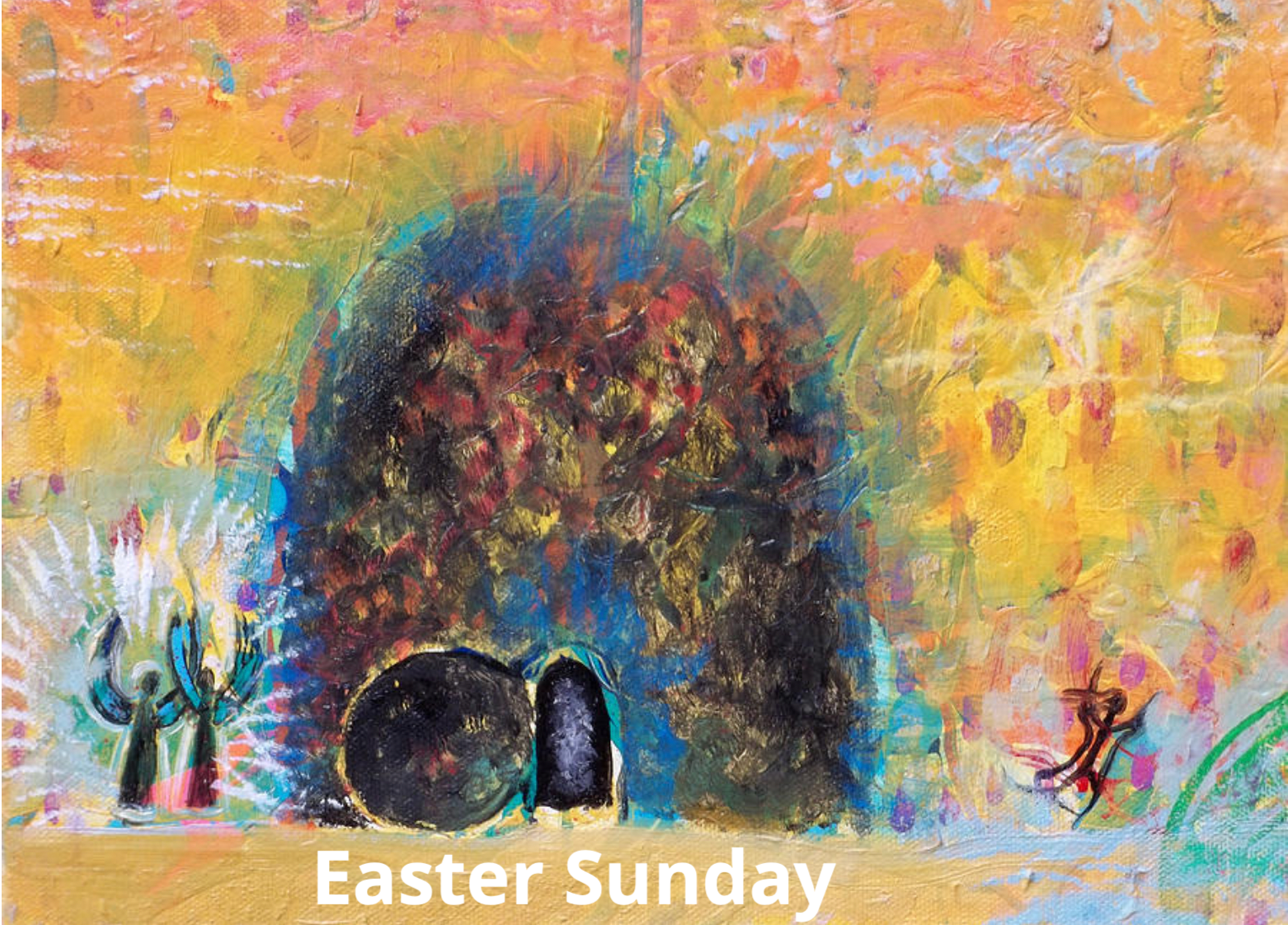
<p><img src="/essays-and-talks/assets/2025-04-20-mini-sermon-on-mark-16-1-to-8/easterSunday.png" alt="Easter Sunday" /></p>

<h3 id="scripture">Scripture</h3>

<p>Mark 16:1-8+ (The Inclusive Bible)</p>

<p><em>[1] When the Sabbath was over, Mary of Magdala, Mary the mother of James, and Salome brought perfumed oils so that they could anoint Jesus. [2] Very early, just after sunrise on the first day of the week, they came to the tomb.</em></p>

<p><em>[3] They were saying to once another, “Who will roll back the stone for us from the entrance to the tomb?” [4] When they looked, they found that the huge stone had been rolled back.</em></p>

<p><em>[5] On entering the tomb, they saw a young person sitting at the right, dressed in a white robe. They were very frightened, [6] but the youth reassured them: “Do not be amazed! You are looking for Jesus of Nazareth, the One who was crucified. He has risn; he is not here. See the place where they laid him. [7] Now go and tell the disciples and Peter, ‘Jesus is going ahead of you to Galilee, where you will see him just as he told you.’“</em></p>

<p><em>[8] They made their way out and fled from the tomb bewildered and trembling; but they said nothing to anyone, because they were so afraid.</em></p>

<p style="text-align:center;">The gospel ends here.</p>

<p style="text-align:center;">Two different endings--the "Shorter Ending" and the "Longer Ending"--were added by later writers.</p>

<h3 id="mini-sermon">Mini-Sermon<sup id="fnref:1"><a href="#fn:1" class="footnote" rel="footnote" role="doc-noteref">1</a></sup></h3>

<p style="text-align:right;">He knew exactly, sort of, what he was going to do.</p>

<p>They’d put Jesus on trial, AGAIN, this time before the Roman governor Pilate. Pilate had come up with this “wonderful, awful idea,” this charge of “indigenous kingship” in potential insurrection against the Roman order. And so he asks Jesus, “Are YOU the King of the Jews?” (13:2b).</p>

<p>Jesus refuses to participate in his own interrogation. He knew this might happen. Not to be outdone, Pilate “consults” the crowds. The chief priests, who were his allies, had them all riled up. And he manipulates them into a false choice–he understands both that Jesus is politically more dangerous to the Roman order than the anti-imperial assassin Barabbas AND how to pacify the crowd. When they shouted “Crucify him!” Pilate handed him over.</p>

<p style="text-align:right;">What he wanted to do most of all was END it.</p>

<p style="text-align:right;">But he wanted the finish to be so definitive, so absolute, so... beautiful even... that the whole episode would stand away from ordinary life as an enameled example of something handled as though someone cared, for once, for the shape of the thing. The form.</p>

<p style="text-align:right;">The "experienced imperial official"-ness of it all; the "procuratorial pragmatism." The shrewdness; the ruthlessness.</p>

<p>And so, crowd pacified, Jesus is crucified, dead, and buried. It happened every day. In Mark’s gospel, the rolling of the stone over the entrance to the tomb (15:46) symbolically ends the story.<sup id="fnref:2"><a href="#fn:2" class="footnote" rel="footnote" role="doc-noteref">2</a></sup> Jesus is dead. The Jewish and Roman authorities have taken over the narrative; the disciples have fled; and there are only a few women left.</p>

<p>But this is Easter! The story doesn’t end there. When those women–Mary Magdalene, Mary the mother of James, and Salome–attempt to salvage some dignity for Jesus’ BODY, they force the story to REOPEN, and take back the narrative from the authorities.</p>

<p>And, you know, I don’t always know what I believe about resurrection; least of all this particular one. But that’s OK! There’s not much of a proclamation of the Easter resurrection message in Mark; no visions of glory or triumph. But we do get an empty tomb, the stone rolled away, this great announcement: “He has been raised” (16:6), and a PROMISE that he is still on the road and you’ll see him again in Galilee. The story will begin… again… in the very place where it all began.</p>

<p>And over the centuries the story continued, and adapted and changed. By the time we get to Matthew and Luke’s later accounts of Jesus’ death and resurrection, Pilate is CONFLICTED about what he’s doing and Jesus sees PURPOSE in his suffering. There’s not just an empty tomb, but RESURRECTION APPEARANCES to Mary Magdalene and his disciples and others, and then… by the time we get to John…</p>

<p style="text-align:right;">...Jesus seemed even during his crucifixion as if he would sail off the cross and float upward.</p>

<p style="text-align:right;">But already in Mark, the authorities wondered if they were [really] wreaking havoc... OR.... if they were in over their heads and God what were they going to do. This wasn't the ending they'd so clearly polished earlier, for Christ's almighty sake.</p>

<p>The story is SO alive that MARK couldn’t even figure out how to end it (16:1-8+). In the original, it ends with the women terrified. They too run away in fear and don’t say anything to anyone. It’s very abrupt and troubling and YET… it’s such an OPEN ending that early on it led to several attempts by the Bible’s editors to append “happier” and more satisfactory conclusions, with a more definitively triumphal resurrection.</p>

<p>But we don’t NEED to RUSH towards resolution (or maybe… today of all days we CAN :) ). The genius of this “‘incomplete’ ending lies precisely in the fact that it demands a response from the reader.”<sup id="fnref:3"><a href="#fn:3" class="footnote" rel="footnote" role="doc-noteref">3</a></sup> From us. And we do respond… in fascinating, brave, complex, and fragile ways.</p>

<p style="text-align:right;">Here they'd wanted this polished finish and what it looked like they'd done was a jagged prologue.</p>

<p>And, of course, the story continues, to this day, and we’re not just readers, or spectators: we are CO-CREATORS. We inherit this wild, beautiful theological tradition, but it’s an open ending, a LIVING tradition.</p>

<p>Resurrection offers us a particular way of seeing reality, if we have eyes to see:</p>

<ul>
  <li>a scandalous, even STUBBORN insistence that God is good, all the time DESPITE all the counter-testimony of history with its violence, suffering, and injustice (those hells we create for each other…<sup id="fnref:4"><a href="#fn:4" class="footnote" rel="footnote" role="doc-noteref">4</a></sup> and for ourselves);</li>
  <li>that God is NOT a king or a judge but “Abba”–someone (something) with whom we can have an INTIMATE relationship;</li>
  <li>that we live in an “already and not yet” reality where:
    <ul>
      <li>the past meets us, with all its beauty, yes, but also brokenness, and</li>
      <li>where every single moment offers possibilities for God’s future to “break in upon us.”</li>
    </ul>
  </li>
  <li>And where God-forsakenness is ONLY a human category<sup id="fnref:5"><a href="#fn:5" class="footnote" rel="footnote" role="doc-noteref">5</a></sup> and nobody gets left out because God refuses to be God without us.<sup id="fnref:6"><a href="#fn:6" class="footnote" rel="footnote" role="doc-noteref">6</a></sup></li>
</ul>

<p>Resurrection is a uniquely Christian HOPE, an invitation to yes, life after death, even life after hell, but it is also an invitation to life BEFORE death. “Believing in the resurrection… means PARTICIPATING in God’s creative act…</p>

<p>…It is the energy for a rebirth of this life.”<sup id="fnref:7"><a href="#fn:7" class="footnote" rel="footnote" role="doc-noteref">7</a></sup></p>

<p>Resurrection is not just something that happened to Jesus a long time ago, but it’s what’s happening NOW to all of creation, including us.</p>

<p>Amen.</p>

<div class="post-categories">
  
  
  <p style="text-alig**N:**right"><em>Categories:</em> <a href="/essays-and-talks/talks">talks</a></p>
  
  
</div>
<div class="footnotes" role="doc-endnotes">
  <ol>
    <li id="fn:1">
      <p>Right-aligned text inspird by <em>Eve’s Hollywood</em> by Eve Babitz <a href="#fnref:1" class="reversefootnote" role="doc-backlink">&#8617;</a></p>
    </li>
    <li id="fn:2">
      <p><em>Binding the Strongman: A Political Reading of Mark’s Story of Jesus</em> by Ched Myers <a href="#fnref:2" class="reversefootnote" role="doc-backlink">&#8617;</a></p>
    </li>
    <li id="fn:3">
      <p>Ibid. <a href="#fnref:3" class="reversefootnote" role="doc-backlink">&#8617;</a></p>
    </li>
    <li id="fn:4">
      <p>Jo Hatlem <a href="#fnref:4" class="reversefootnote" role="doc-backlink">&#8617;</a></p>
    </li>
    <li id="fn:5">
      <p>Jo again! <a href="#fnref:5" class="reversefootnote" role="doc-backlink">&#8617;</a></p>
    </li>
    <li id="fn:6">
      <p>Tripp Fuller <a href="#fnref:6" class="reversefootnote" role="doc-backlink">&#8617;</a></p>
    </li>
    <li id="fn:7">
      <p><em>The Crucified God</em> by Jürgen Motlman <a href="#fnref:7" class="reversefootnote" role="doc-backlink">&#8617;</a></p>
    </li>
  </ol>
</div>]]></content><author><name></name></author><category term="talks" /><summary type="html"><![CDATA[On Sunday, April 20, 2025, I gave a mini-sermon at Shalom Community Church. This is an adaptation of the mini-sermon. (My friend Michelle read the parts inspired by Eve Babtitz.) The audio is available here:]]></summary></entry><entry><title type="html">walking in the snow (Sermon on Mark 10:35-45a)</title><link href="http://localhost:4000/essays-and-talks/talks/sermon-on-mark-10-35-to-45/" rel="alternate" type="text/html" title="walking in the snow (Sermon on Mark 10:35-45a)" /><published>2025-04-06T00:00:00-04:00</published><updated>2025-04-06T00:00:00-04:00</updated><id>http://localhost:4000/essays-and-talks/talks/sermon-on-mark-10-35-to-45</id><content type="html" xml:base="http://localhost:4000/essays-and-talks/talks/sermon-on-mark-10-35-to-45/"><![CDATA[<p>On Sunday, April 6, 2023, I gave a sermon at Shalom Community Church. This is an adaptation of the sermon. <a href="https://shalomcc.org/walking-in-the-snow/">Here is an audio version.</a></p>

<hr />

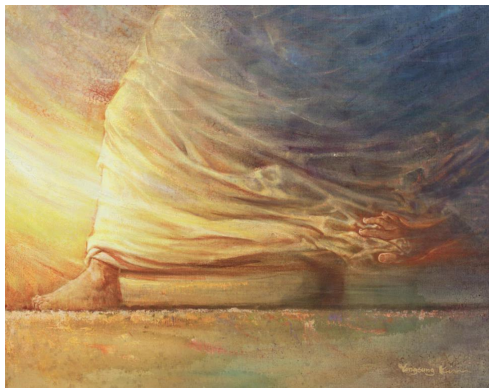
<p><img src="/essays-and-talks/assets/2025-04-06-sermon-on-mark-10-35-to-45/Lent.png" alt="Lent" /></p>

<h3 id="scripture">Scripture</h3>

<p>Mark 10:35-45a (The Inclusive Bible)</p>

<p><em>[35] Zebedee’s children James and John approached Jesus. “Teacher,” they said, “we want you to grant our request.”</em></p>

<p><em>[36] “What is it?” Jesus asked.</em></p>

<p><em>[37] They replied, “See to it that we sit next to you, one at your right and one at your left, when you come into your glory.”</em></p>

<p><em>[38] Jesus told them, “You do not know what you are asking. Can you drink the cup I will drink or be baptized in the same baptism as I?”</em></p>

<p><em>[39] “We can,” they replied. Jesus said in response, “From the cup I drink of, you will drink; the baptism I am immersed in, you will share. [40] But as for sitting at my right or left, that is not mine to give; it is for those to whom it has been reserved.”</em></p>

<p><em>[41] The other ten, on hearing this, became indignant at James and John.</em></p>

<p><em>[42] Jesus called them together and said, “You know how among the Gentiles those who exercise authority are domineering and arrogant; those ‘great ones’ know how to make their own importance felt. [43] But it can’t be like that with you. Anyone among you who aspires to greatness must serve the rest; [44] whoever wants to rank first among you must serve the needs of all. [45] The Promised One has come not to be served, but to serve.”</em></p>

<h3 id="sermon">Sermon</h3>

<p>We are halfway through our story.</p>

<p>Jesus has been ministering in Galilee, teaching in synagogues, performing miracles and exorcisms (a lot of them… and UNCOMFORTABLE amount of them), and healing the sick. And he quickly becomes famous (or maybe it’s better to say _IN_famous) for doing so. He’s also called his first disciples, Peter and Andrew, then James and John and then others who basically drop everything and follow him. They join his Galilean ministry to Jews and… increasingly… Gentiles alike.</p>

<p>Up until this point, particularly as it is presented in this EARLIEST gospel, Mark, the disciples have no idea that Jesus is the Messiah, the “Anointed One” (Anabaptist Bible). They weren’t there when Jesus was baptized, they didn’t hear the voice from heaven, and they didn’t witness Jesus’ confrontation with Satan in the desert. WE know all this because that’s what our narrator Mark tells us. But the disciples, who are “just” characters in this story, they really don’t.</p>

<p>And, of course, Jesus–the protagonist and our main character–never tells them! In fact, he repeatedly tries to conceal whatever messianic identity (or aspirations?) he might have had. He silences the demons that recognize him. He swears those he heals to secrecy. He veils himself in INCOMPREHENSIBLE riddles/parables and goes out of his way to obscure his identity and mission from the crowds that gather around him. And maybe that was strategic; Mark’s Jesus is a revolutionary, after all, and he had to be careful. But over and over again Jesus rebuffs, avoids, eludes, and sometimes downright rejects the title of Messiah bestowed upon him by others.<sup id="fnref:1"><a href="#fn:1" class="footnote" rel="footnote" role="doc-noteref">1</a></sup></p>

<p>And so the question of Jesus’ identity has been lingering in the background. But here, in the middle of the story, Jesus suddenly forces the issue. “Who do people say I am?” he asks his disciples, and then, “Who do YOU say that I am” (8:27, 29)?</p>

<p>And gradually the disciples come to this realization that Jesus IS the Messiah. First it was Peter, Jesus’ first disciple, the “Rock.” He kind of intuits it. And then it was James and John, although it took Jesus becoming “radiant in glory,” with his clothes becoming dazzling white, whiter than white–his transfiguration on a high mountain “in a different world”–for them to get it.</p>

<h4 id="times-change-the-world-changes-and-obviously-the-martial-arts-marks-narrative-must-change-too">Times Change, the World Changes, and Obviously <del>the Martial Arts</del> Mark’s Narrative Must Change Too</h4>

<p>And things start to change. Jesus starts to talk a whole lot MORE about what the reign (or government) of God looks like, and what discipleship looks like. And how I wish I could go back in time and tell myself this: It’s NOT about personal piety, or PURITY of any kind. It’s not spiritual, or cosmic; and theological orthodoxy is not sufficient–and in fact it’s not even important. For Mark, at least, it is political. The Rebel Jesus is calling for non-violent resistance to the Roman Empire and not JUST that but practicing service and justice in EVERY sphere of life.<sup id="fnref:2"><a href="#fn:2" class="footnote" rel="footnote" role="doc-noteref">2</a></sup></p>

<p>The setting also changes… if Mark’s Jesus begins his ministry–like that of John the Baptist–by preaching a gospel of repentance–of turning around, of TURNING AWAY FROM religious ceremony or the authority of Rome and the religious leaders complicit with it and TOWARD THE POOR<sup id="fnref:3"><a href="#fn:3" class="footnote" rel="footnote" role="doc-noteref">3</a></sup>–it’s also interesting that in this moment Jesus physically TURNS AWAY FROM from the wilderness… and the lakeshore and the desert and the outskirts of town in the far north of Palestine… and TOWARD Jerusalem, TOWARD a final showdown with the authorities. Here he begins his sustained journey to the very HEART OF THINGS to challenge the Roman Empire and its system of power and injustice.<sup id="fnref:4"><a href="#fn:4" class="footnote" rel="footnote" role="doc-noteref">4</a></sup></p>

<p>“On the way”–this whole section of Mark happens ON THE WAY to Jerusalem–the exorcisms, healings, and works of power over nature become rarer. They don’t disappear completely, but when we do hear about them they function differently in the narrative: no longer “proofs” of his divinity but instead… healing a blind man becomes a FOIL for his disciples inability to “see”; cursing a fruitless fig tree becomes a PARALLEL for his attack on the failure of Israel’s leaders to produce metaphorical fruit.<sup id="fnref:5"><a href="#fn:5" class="footnote" rel="footnote" role="doc-noteref">5</a></sup> At this point in the narrative, the conflict in Mark is less about Jesus’ conflict with demons, illness, and nature, and more about his conflict with people.</p>

<h4 id="you-got-your-good-yknow-and-your-bad-you-got-your-food-and-your-liquor">You Got Your Good, Y’Know, and Your Bad; You Got Your Food, and Your Liquor</h4>

<p>Now, we’re not quite at the part yet where the people Jesus comes into conflict with are the authorities, although that IS coming. Instead, it’s his disciples that are the issue.</p>

<p>The disciples, sharing cultural expectations at the time, expected the Messiah to come in power and glory. This is fundamental, for example, to Peter’s recognition of Jesus: Peter hails him as A MESSIAH, A ROYAL FIGURE who will restore the political fortunes of Israel… he believes that the TRIUMPHAL revolution is at hand. And because of this the disciples naturally assume that they will benefit from being in Jesus’ inner circle: they expect prosperity, importance, and positions of power when God’s reign is established in Israel.</p>

<p>But then Jesus starts to teach them about the VALUES of this reign. And it’s not what they expect. Jesus tells them that if they truly want to save their lives, they will RISK their lives in service to this good news; if they want to be first, they will have to be last; and if they want to be most important, they will be servants of all and lord over no one. It entails solidarity with the “least of these” (9:35f), equality and compassion in families and in communities (10:15), economic justice and sharing (10:29f), and service rather than domination (10:42-44).<sup id="fnref:6"><a href="#fn:6" class="footnote" rel="footnote" role="doc-noteref">6</a></sup> The Messianic revolution is NOT about seizing power in order to impose a new social order from the top down; it is about transforming relationships and building the new order from the bottom up.</p>

<h4 id="and-thats-not-all">And That’s Not All…</h4>

<p>Jesus also starts getting “real” about the consequences of living into this reign of God: he starts predicting his execution (and resurrection… which is confusing to the disciples… but regarless he’s going to die). At first, Peter rejects this: the death of the Messiah just… does not compute in his worldview. But the conflict intensifies when Jesus goes on to make a series of three prophecies that insist upon his impending death.</p>

<ul>
  <li>In Mark 8: Jesus predicts for a second time that he will be killed. Peter again rebukes him.</li>
  <li>In Mark 9: Jesus predicts that he “will be delivered into the hands of others and will be put to death…” And rather than coming to terms with that, the disciples start arguing about which one of them is the greatest.</li>
  <li>And it culminates in Mark 10, what we read today: Jesus predicts that he will be handed over, condemned to death, mocked, spat upon, flogged, and finally, killed. And–kinda like children–James and John respond wanting Jesus to “grant their request” before he even knows what it is: to “see to it that we sit next to you, one at your right and one at your left, when you come into your glory.” They are asking to be Jesus’ #2 and #4, posturing for positions of power in the age to come.</li>
</ul>

<p>They don’t seem to get it. It’s almost like they can’t “see” it, hence the parable.</p>

<p>And it’s easy to judge. But, I recognize this kind of conflict, this kind of infighting among groups of people trying to do the right hting. I see it at work. I see it in other groups that I belong to. I see it in my family. I love you guys, but I see it here at church, too. And FOR SURE I see it in myself.</p>

<p>This kind of conflict is all very normal; it is a VERY HUMAN STRUGGLE to follow Jesus.</p>

<h4 id="walking-in-the-snow">walking in the snow</h4>

<p>Even still, Jesus is very clear: the structures of power and domination used by Rome can only be overthrown by RELATIONAL and POLITICAL nonviolence, as Ched Meyers says, “from the crib[–in our most intimate relationships–]to the courtroom.”</p>

<p>And he’s also clear that this “courtroom” is NOT metaphorical but a PUBLIC and POLITICAL trial. These are the kind of values that WILL LEAD to PERSECUTION by the authorities. “Never forget in the story of Jesus, the hero was killed by the state.”<sup id="fnref:7"><a href="#fn:7" class="footnote" rel="footnote" role="doc-noteref">7</a></sup>  He… and his disciples… will have to take up their cross. Their LITERAL cross, a common sight in the revolutionary Palestine of Mark’s time, that terrible form of execution reserved by Rome for those who dared challenge the state. John the Baptist, after all, had been killed for much less.<sup id="fnref:8"><a href="#fn:8" class="footnote" rel="footnote" role="doc-noteref">8</a></sup></p>

<p>And the disciples just can’t hear all this. In their consternation they even go so far as to MIMIC the oppressive behavior of the authorities: they EXCLUDE someone exorcising in Jesus’ name; they REBUKE children; they are SHOCKED that a wealthy man (who has kept the commandments) might not inherit eternal life. They get “indignant” with each other and in turn, Jesus gets angry with them, even threatens them with loss of life and limb. This is not a gentle Jesus, not the meek and mild Jesus we sing about sometimes.</p>

<h4 id="lost-great-ones"><del>Lost</del> “Great Ones”</h4>

<p>And that’s because “it can’t be like that with you.” That’s what Jesus says to his disciples. Jesus can’t have his disciples acting like the authorities we read about today.</p>

<ul>
  <li>Those “domineering and arrogant” authorities; “those ‘great ones’ that know how to make their own importance felt” (Inclusive Bible).</li>
  <li>Those who “lord it over them” (from the NRSV).</li>
  <li>Those “People of Iron (Romans)” that “like to show their power over people and push them around” (that one from “War Club”–actually it’s a good name for Mark–from “War Club Tells the Good Story” in the First Nations version of the Bible).</li>
</ul>

<p>Mark, and therefore Mark’s Jesus, knows a thing or two about these authorities. Mark was written down in about 70 CE in the wake of the destruction of the Second Temple in Jerusalem by Roman forces, and so the people listening to this story would have immediately understood who Mark was talking about.</p>

<p>And, yeah, we know those kinds of authorities too. They’re still around, occupy the highest office in this land. One of them wasn’t even elected.</p>

<p>And, yes, we have Jesus’ instructions for exactly what to do when we find ourselves in this kind of situation. And besides that, we have the WITNESS of our spiritual ancestors who tried hard to live out this gospel: refusing to enact violence against their enemies EVEN AS they took a BOLD STANCE of resistance against the state-church and the authoritarian regimes of their own countries, and EVEN WHEN it led to their own suffering.<sup id="fnref:9"><a href="#fn:9" class="footnote" rel="footnote" role="doc-noteref">9</a></sup></p>

<p>But “Reading the Gospels 101” is understanding that the disciples are stand-ins for us, and, like them… we know what to do or we learn what to do… and we don’t always do it. It’s hard. It’s not what we signed up for. Jesus is confusing. And there is A LOT at stake. And let’s be honest: many of us have accumulated some wealth or status, or come from some kind of privilege, whether your gender or your race or your class or… all of the above. As a result, we’ve tasted the kind of power that Peter, and James and John are interested in, and we would be lying if we didn’t say that it can be kinda nice.</p>

<p>And if things ever get bad, I mean really bad, Melissa Florer-Bixler and Jennifer Harvey remind us that if all else fails, most of us here can HIDE behind Whiteness or–since Chrisitianity is the dominant religion where we live–behind Christianity if we ever need to just LAY LOW and survive among the many Chrisitian Nationalists whose support was crucial in Donald Trump’s LANDSLIDE victory last year. And we know from those same spiritual ancestors… or maybe even from personal experience… that sometimes we do.</p>

<p>“Our Anabaptist history is one of RADICAL COMMITMENT to the gospel” writes Florer-Bixler, BUT it’s also one with a SURVIVALIST tradition “in which white, ethnic Anabaptists responded to persecution and displacement by aligning themselves with the sinful and deadly interests of the state,” whether by farming the lands the U.S. military forcefully took from Indigenous peoples… or racializing their identity and adopting Whiteness–even as top tier exemplars of the Aryan race–during the Third Reich. And while, yes, she is talking here about ethnic Mennonites, her article, “Anabaptist Trumpism,” could have just as easily been called “Mainline Protestant Trumpism” (which is closer to my own tradition) because BOTH histories are histories where “dear” White Christians “receiv[ed] the spoils of Whiteness,” even if they didn’t quite actively participate in, and certainly didn’t actively resist “the violence required to realize their (White) economic and social gain.”<sup id="fnref:10"><a href="#fn:10" class="footnote" rel="footnote" role="doc-noteref">10</a></sup></p>

<h4 id="but-it-cant-be-like-that-with-you">But It Can’t Be Like That With You</h4>

<p>But it can’t be like that with you. I keep coming back to Jesus’ response to James and John. It can’t be like that with you. It has been like that. It could be like that; we’d all understand. But it CAN’T. We expect Jesus’ story to be a knock-off of the world’s story, but it is a different story (LectioCast).</p>

<p>It’s important that we’re reading Mark RIGHT NOW because we inhabit a LONG HISTORY of Caesars establishing empires of their own power and economic exploitation all while claiming God’s blessing. And we can’t ignore it, or hide from it, or try to blend in. We have to resist, we have to challenge “politics as usual” in every sphere of life. In big ways, like Jesus did. But also in small ways.</p>

<p>It’s writing a letter to a trans youth. It’s splitting up household chores in equitable ways. It’s encouraging our daughters to TAKE UP SPACE. It’s having a birthday party at a Tesla protest. It’s fighting to keep churches as SANCTUARIES. And it’s a million other things, too.</p>

<p>In the end, the only people sitting at Jesus’ right and left when he died were two rebels that were crucified next to him. James and John weren’t there; none of the disciples were. (It turns out, BTW, that there were some women around… that’s in Mark AND Matthew and Luke. Those women were ALREADY living out the values that Jesus preached and we can learn from them about whose voice to look to for inspiration in times like these. His disciples, though, were scared. They wanted to survive, and so… they fled.</p>

<p>But it can’t be like that with US. We are focused in this series on the story of Jesus. It is a challenge. This Lent, may we follow Jesus and find a way to turn–just like he did–straight towards the heart of things.</p>

<p>Amen.</p>

<div class="post-categories">
  
  
  <p style="text-alig**N:**right"><em>Categories:</em> <a href="/essays-and-talks/talks">talks</a></p>
  
  
</div>
<div class="footnotes" role="doc-endnotes">
  <ol>
    <li id="fn:1">
      <p><em>Zealot: The Life and Times of Jesus of Nazareth</em> by Reza Aslan <a href="#fnref:1" class="reversefootnote" role="doc-backlink">&#8617;</a></p>
    </li>
    <li id="fn:2">
      <p>“The Rebel Jesus” by Jackson Browne, even though that’s really an Advent song… <a href="#fnref:2" class="reversefootnote" role="doc-backlink">&#8617;</a></p>
    </li>
    <li id="fn:3">
      <p>Thank you, Jo <a href="#fnref:3" class="reversefootnote" role="doc-backlink">&#8617;</a></p>
    </li>
    <li id="fn:4">
      <p>John Dominic Crossan and Marcus Borg <a href="#fnref:4" class="reversefootnote" role="doc-backlink">&#8617;</a></p>
    </li>
    <li id="fn:5">
      <p><em>Mark as Story: An Introdcution to the Narrative of a Gospel</em> by David M. Rhoads and Donald Michie <a href="#fnref:5" class="reversefootnote" role="doc-backlink">&#8617;</a></p>
    </li>
    <li id="fn:6">
      <p><em>Binding the Strongman: A Political Reading of Mark’s Story of Jesus</em> by Ched Myers <a href="#fnref:6" class="reversefootnote" role="doc-backlink">&#8617;</a></p>
    </li>
    <li id="fn:7">
      <p>“walking in the snow” by Run The Jewels <a href="#fnref:7" class="reversefootnote" role="doc-backlink">&#8617;</a></p>
    </li>
    <li id="fn:8">
      <p>Some guy wrote this on Bart Ehrman’s blog… <a href="#fnref:8" class="reversefootnote" role="doc-backlink">&#8617;</a></p>
    </li>
    <li id="fn:9">
      <p><a href="https://anabaptistworld.org/anabaptist-trumpism/">Anabaptist Trumpism</a> by Melissa Florer-Bixler <a href="#fnref:9" class="reversefootnote" role="doc-backlink">&#8617;</a></p>
    </li>
    <li id="fn:10">
      <p>Ibid. and <em>Dear White Christians: For Those Still Longing for Racial Reconciliation</em> by Jennifer Harvey <a href="#fnref:10" class="reversefootnote" role="doc-backlink">&#8617;</a></p>
    </li>
  </ol>
</div>]]></content><author><name></name></author><category term="talks" /><summary type="html"><![CDATA[On Sunday, April 6, 2023, I gave a sermon at Shalom Community Church. This is an adaptation of the sermon. Here is an audio version.]]></summary></entry><entry><title type="html">¡Hay Mariposa! (Sermon on Malachi 3:1-4)</title><link href="http://localhost:4000/essays-and-talks/talks/sermon-on-malachi-3-1-to-4/" rel="alternate" type="text/html" title="¡Hay Mariposa! (Sermon on Malachi 3:1-4)" /><published>2024-12-08T00:00:00-05:00</published><updated>2024-12-08T00:00:00-05:00</updated><id>http://localhost:4000/essays-and-talks/talks/sermon-on-malachi-3-1-to-4</id><content type="html" xml:base="http://localhost:4000/essays-and-talks/talks/sermon-on-malachi-3-1-to-4/"><![CDATA[<p>On Sunday, December 8, 2023, I gave a sermon at Shalom Community Church. This is an adaptation of the sermon. <a href="https://shalomcc.org/hope-and-expectations/">Here is an audio version.</a></p>

<hr />

<p><img src="/essays-and-talks/assets/2024-12-08-sermon-on-malachi-3-1-to-4/unnamed.png" alt="Swallowtail Catterpillar" /></p>

<h3 id="scripture">Scripture</h3>

<p>Malachi 3:1-4 (The Inclusive Bible)</p>

<p><em>[1] Well, pay attention! I am sending my Messenger to prepare the way for me; the One you seek will suddenly come to the Temple, the Messenger of the Covenant whom you long for will come, says God. [2] But who can endure the day of that Coming? Who can stand firm when that One appears? That day will be like a smelter’s fire, a launderer’s soap. [3] The One will preside as refiner and purifier, purifying the Children of Levi, refining them like gold and silver–then they will once again make offerings to God in righteousness. [4] Then the offerings of Judah and Jerusalem will be pleasing to God as they were in former days, in years long past.</em></p>

<h3 id="sermon">Sermon</h3>

<h4 id="the-setup">The Setup</h4>

<p>Food is important to Ashley and I–I mean know it’s important to everyone but I’m talking about fresh, local, plant-first food, the kind of food that nurtures your spirit as well as your body–and so is environmental stewardship. And maybe you have things like this that are important to you. Because of this, over the years Ashley and I have “tried on” various practices that we feel align with these core values. Not all of them have stuck, but one that has is vegetable gardening.</p>

<p>We live, and always have, in small places like apartments and condos, and so these have always been pretty modest affairs. But this past summer, Ashley and I–and Leila and Clay–“leveled up” our gardening game. We finally said “yes” to using one of Shalom’s plots in the <a href="https://projectgrowgardens.org/community-gardens/sites-original/county-farm-park">Community Garden at County Farm Park</a>. For a vegetable garden. A big one.</p>

<p>We got a bunch of seeds from the Ann Arbor District Library’s Seed Sampler program–the Leafy Greens Bundle, the Squashes and Beans Bundle, and Mammoth Long Island Dill, all native to the Great Lakes region–and one Saturday in May we went over to our plot and planted them.</p>

<p>Once or week or so we’d return to TEND the garden: watering the plants, pulling weeds, and picking potato bugs off the leaves of some volunteer potatoes. A few weeks later, we had little seedlings. Our plants grew and grew until finally, by late July, our vegetable garden started yielding vegetables.</p>

<p>And we started harvesting and eating them.</p>

<p>And then harvesting and eating A LOT of them!</p>

<p>There were days towards the end of the summer that I was eating something from that garden for breakfast, lunch, and dinner, and we STILL had leftovers to share with friends and family, including in dishes we brought to potlucks here.</p>

<h4 id="uno-oruguita">Uno Oruguita</h4>

<p>Fast forward a few months. It’s October–basically the end of the growing season–and we’re on one of our weekly trips to County Farm.</p>

<p>Actually, we ran into Laura Ponstein while we were there. (That wasn’t too unusual; it turns out that COMMUNITY Church plots in COMMUNITY Gardens live up to the “community” part just as much as they do the “church” and “garden” parts.) And so there we were, tending the garden, all of us, together.</p>

<p>And at one point Leila and Clay called us over. They’d discovered a few caterpillars munching on some dill–that Mammoth Long Island Dill–and they were excited and wondered if we could take one of them home to see if we could watch it grow into a butterfly. Now, I don’t really know the rules about this kind of thing, but Laura told us that these were swallowtail butterfly caterpillars–good to know–and that we might as well… otherwise they’d probably get eaten by birds.</p>

<p>And so we did.</p>

<p>When we got home, we made a little Mason Jar Terrarium for the caterpillar, and we looked up swallowtail butterflies, which are amazing: they’re these large, beautiful, colorful butterflies whose forked hind wings look like a swallow’s tail, hence the name. They are the favorite of butterfly collectors, the state insect of not one, not two, but SIX states (27 if you count any butterfly) AND a symbol of transformation, rebirth, and hope for the Hopi Tribe and the Blackfoot Nation.</p>

<p>Anyway! The whole point is that we were excited to see this butterfly and even more so after learning about its beauty and cultural significance.</p>

<p>And, so, just like the garden, we tended it. We made sure it had a safe home, space to crawl around, and enough food to eat. We watched that caterpillar eat, and poop, and eat and poop and get really, REALLY plump until, finally, it turned into a chrysalis!</p>

<p>And maybe it’s the novelty of the whole thing–I know that this is a normal part of a butterfly’s life cycle, just like it’s normal for seeds to turn into vegetables–but it still felt amazing, like a miracle… even if “just” an everyday kind of miracle. Mary Oliver has this poem <em>The Gardener</em> about a “simple man” tending his roses, where she writes:</p>

<blockquote>
  <p>Have I lived enough?</p>
</blockquote>

<blockquote>
  <p>Have I loved enough?</p>
</blockquote>

<blockquote>
  <p>Have I considered Right Action enough, have I come to any conclusions?</p>
</blockquote>

<blockquote>
  <p>Have I experienced happiness with sufficient gratitude?</p>
</blockquote>

<blockquote>
  <p>Have I endured loneliness with grace?</p>
</blockquote>

<p>And while most of the time the answer to those questions–for me, anyway–is “no,” at least in this instance, it was “yes!” (Totally not the point of the poem… but still.) We had vegetables. We had a chrysalis; we were halfway to a butterfly. All we had to do was wait.</p>

<h4 id="anticipation-its-making-me-wait-ncaa-college-basketball-2k-">Anticipation… It’s Making Me Wait… (NCAA College Basketball 2K 😳)</h4>

<p>And that waiting, that anticipation, it’s what Advent is all about, the often-overlooked season preceding Christmas where the open-hearted, empty-handed friends of God have recognized for millennia that when all is bleakest, we let go of our burdens and wait.<sup id="fnref:1"><a href="#fn:1" class="footnote" rel="footnote" role="doc-noteref">1</a></sup></p>

<p>And that’s what the text from Malachi we read earlier depicts: a beautiful people waiting for and expecting the beautiful and celebrated arrival of God.</p>

<p>(Malachi BTW was probably not a proper name, simply Hebrew for “My Messenger.” The real writer probably used it as a pseudonym to protect themselves from retaliation: their prophecies–just like the one we read today–have a very “God damn America” kind of vibe, just directed at Second Temple Judaism.)</p>

<p>And, yeah, there’s a bit of talk about refining and purifying… and people have taken those metaphors and run with them… but all Malachi is really getting at here is God’s people looking ahead and expecting and anticipating God’s arrival, and so taking stock of what they need to do to get ready. Keeping those practices, those Right Actions, that prepare the way for God, and discarding those that don’t. So that when God does finally come it’s not some scary thing but something to celebrate and, what’s more, so that there won’t even be a big difference between present reality and the coming kin-dom of God. It’s a hopeful message.<sup id="fnref:2"><a href="#fn:2" class="footnote" rel="footnote" role="doc-noteref">2</a></sup></p>

<p>Or at least tries to be.</p>

<p>It’s not easy to wait. And at Shalom we’ve been doing a lot of waiting: COVID, pastoral changes, a new building. We WERE ready to focus this Advent–this Sunday in particular–on “arriving” and “incarnation.”</p>

<p>And then Trump won the election. And it feels like we really NEED Advent because far from “arriving,” we find ourselves in yet another holding pattern:</p>

<ul>
  <li>Waiting… for the time when the “last shall be first, and the first shall be last.”<sup id="fnref:3"><a href="#fn:3" class="footnote" rel="footnote" role="doc-noteref">3</a></sup> For the world turned upside down.<sup id="fnref:4"><a href="#fn:4" class="footnote" rel="footnote" role="doc-noteref">4</a></sup></li>
  <li>Waiting… for people to care more about their neighbor than they do the price of eggs.<sup id="fnref:5"><a href="#fn:5" class="footnote" rel="footnote" role="doc-noteref">5</a></sup></li>
  <li>Waiting… for God’s kin-dom to come, God’s will to be done, on EARTH as in heaven. For Immanuel, God-with-us.</li>
</ul>

<p>Waiting, in anticipation, kind of like we were for this chrysalis to transform–miraculously(?)–into a butterfly.</p>

<h4 id="becoming-a-butterfly-is-a-dangerous-game">Becoming a Butterfly is a Dangerous Game</h4>

<p>We diligently checked that jar, every single day. For weeks. Until one day, Ashley and the kids got home from work and school and saw movement.</p>

<p>They went to take a closer look and… it was NOT a butterfly in the jar.</p>

<p>It was a wasp.</p>

<p>And we were shocked and confused and disappointed; this wasn’t the outcome we were expecting. Ashley, in fact, almost couldn’t believe what she was seeing:</p>

<ul>
  <li>Maybe it really was a butterfly, but we’d made the terrarium too small, or didn’t give it enough food, and so it had something “wrong” with its wings.</li>
  <li>Or maybe we’d been wrong about it being a swallowtail butterfly caterpillar altogether.</li>
  <li>Or maybe we’d somehow gotten a wasp egg in the jar. But then there was this perfect little hole in the chrysalis where the wasp had emerged.</li>
</ul>

<p>And eventually reality set in.</p>

<p>Our caterpillar–our beautiful little caterpillar who had such a promising future–had been eaten alive, from the inside out. By a wasp. Specifically, a parasitoid wasp, so called because it starts out life as a parasite, on or in the body of its host–our caterpillar–but ends up as a predator, eating the host entirely before emerging as an adult.<sup id="fnref:6"><a href="#fn:6" class="footnote" rel="footnote" role="doc-noteref">6</a></sup></p>

<p>Ashley, being the good, humane person that she is, SQUASHED that thing before it had a chance to sting us OR our children.</p>

<p>Just kidding. She took it outside and released it. We’d do that anyway but we looked it up and apparently, parasitoid wasps are beneficial to the ecosystem in general and to gardeners–like the ones we are trying to become–in particular, because they help control pests. Which is ironic because it was the CATERPILLAR that was eating our vegetables in the first place. Like a pest.</p>

<p>All of which means… and I say this reluctantly… that the wasp, even though it’s not what we wanted (and BTW it’s the state insect of only ONE state, and it’s a weird one: NM), is probably better than the caterpillar for both food and environmental stewardship. Which are important to us.</p>

<p>(Although a pollinating butterfly might give it a run for its money…)</p>

<h4 id="thinking-twice-about-advent">Thinking Twice About Advent</h4>

<p>And all this has me thinking twice about Advent. And what it means to wait… and prepare… and then to deal with disappointment when you don’t get the outcome that you LONG FOR or are expecting. Whether that outcome is a wasp instead of a butterfly, the result of an election, Mike Tyson losing to Jake Paul–like 2024 must be the YEAR of the stupid white man–Dana Nessel and the Regents of the University of Michigan pressing charges against those kids from the U-M encampment, or a new U.S. administration’s potential impact on higher education, particularly in areas like DEI.</p>

<p>And whether all of these disappointments might point to some HARD truth of more biblical proportions, about whether as God’s people it’s reasonable to expect that we’ll ever get what we’re hoping and striving for.</p>

<h5 id="were-the-human-beans">We’re the Human Beans</h5>

<p>So. Yeah. I’ve been looking for hope, any kind of hope.</p>

<p>And there’s one school of thought–one I first learned from a karate mentor (of all people)–that says: OK, this isn’t the outcome we wanted. Actually, it’s terrible, but here we are.</p>

<p>But we have to remember that it’s also not the end, and in some ways it’s kind of like Day 1.<sup id="fnref:7"><a href="#fn:7" class="footnote" rel="footnote" role="doc-noteref">7</a></sup> Time to “go back to the drawing board” (RIP Calvin) and get back to work. And that’s because the work of making this world resemble one that we would prefer to live in–one that approaches, as Malachi might say, the world as it WILL look when God arrives–is a hard, thankless job. It’s a grind. And disappointment happens, and mistakes, and burnout, but the moral arc of the universe bends towards justice.<sup id="fnref:8"><a href="#fn:8" class="footnote" rel="footnote" role="doc-noteref">8</a></sup> A better world is possible, and we can’t lose sight of that.<sup id="fnref:9"><a href="#fn:9" class="footnote" rel="footnote" role="doc-noteref">9</a></sup></p>

<p>And that is a hopeful sentiment, especially when it comes to the election. But, I’ll be honest, it’s not sitting quite right with me this time around. Because it seems like it’s a PARTICULARLY hopeful sentiment… for people who look like me. The kind of people who seem pretty good at staying in power no matter which side’s in charge, the kind of people who can afford to wait, the kind of people I wasn’t really worried about to begin with.</p>

<h5 id="were-the-very-hungry-caterpillar">We’re the Very Hungry Caterpillar</h5>

<p>Which has me thinking that maybe I’m looking at this all wrong. Maybe we’re all just open-hearted, empty-handed caterpillars right now, letting go of our burdens and waiting to see if, at God’s arrival, we’ll have become butterflies (or wasps). Hoping for–and working towards–the butterfly, but letting go of the outcome.</p>

<p>Or maybe, IF we allow ourselves to be honest, we don’t trust God right now to swoop in and sort things out. God’s track record is pretty questionable as of late, and besides, the last time anything swooped in, it was a bird, and it ate us.</p>

<p>Which might mean that we can do is see this as an invitation to not just action or Right Action but Right Action with creativity, the kind of creativity that only comes from places of darkness. Because we know from experience that when things are going well, we can get pretty comfortable with the powers and principalities of this world. But when they’re NOT, we can finally(?) get motivated to be the change we want to see in the world. And I hate to say it, but things feel pretty dark and bleak right now; we’ve got a lot to work with, a lot that we can turn into fuel for creative Right Action.</p>

<h5 id="were-the-alien-from-inner-space">We’re the Alien from Inner Space</h5>

<p>Or maybe that’s not the right move, either. Maybe we’re not the caterpillar at all; maybe… we’re the parasite, inside the host. The enemy, it turns out, wasn’t out there, it was within us and was us, the whole time.<sup id="fnref:10"><a href="#fn:10" class="footnote" rel="footnote" role="doc-noteref">10</a></sup></p>

<p>And this cosmic story that we tell ourselves we’re apart of, especially during seasons like Advent, with its protagonists and antagonists and its concern with death, judgment, and the final destiny of the soul it turns out, isn’t even fair. IRL, there ARE NO real protagonists and antagonists. Wasps are good for food and environmental stewardship, too.<sup id="fnref:11"><a href="#fn:11" class="footnote" rel="footnote" role="doc-noteref">11</a></sup></p>

<h5 id="devils-advocate">Devil’s Advocate</h5>

<p>And I’ll just say it. I know we’re at church, about to celebrate Christmas. But maybe, just maybe, there is no cosmic story. And it would be really good for us to snap out of our stubborn(?) belief that there is one so that we can stop being so good at tolerating disappointment. There’s a lot at stake when we do that, especially for people who don’t look like us.</p>

<h4 id="here-comes-the-cheese-monster">Here Comes the Cheese Monster</h4>

<p>But I can’t end there. Or I won’t.</p>

<p>More than anything, I believe that regardless of where you or I fall on any of the above… or maybe, if you’re like me, that depends on the day…<sup id="fnref:12"><a href="#fn:12" class="footnote" rel="footnote" role="doc-noteref">12</a></sup> we are here for each other. That’s something I believe in the very core of my being. And we can draw on our friendships and connections and solidarity as we pilgrimage simply, peacefully, and together.</p>

<p>Because yes, our community will face challenges in the coming year(s), but it also loves, laughs, and evolves, and we have this wonderful faith tradition even if we aren’t always “traditional.”<sup id="fnref:13"><a href="#fn:13" class="footnote" rel="footnote" role="doc-noteref">13</a></sup></p>

<ul>
  <li>Mennonites and Brethren have a 500-year history of opposing Christian nationalism–which is one of the reasons, having been a kind of Chrisitan nationalist myself in the past, that I like you guys–and that makes us well-equipped to point out its connections to Trumpers and Christian Zionism.</li>
  <li>More generally: Anabaptist traditions have dealt with state repression and nationalistic fervor many times over the centuries.</li>
  <li>And our faith communities–and we have a broad umbrella of them here at Shalom–have always responded in situations like these by rooting our churches and the communities we’re a part of more deeply in our shared opposition to racism and consumerism and militarism<sup id="fnref:14"><a href="#fn:14" class="footnote" rel="footnote" role="doc-noteref">14</a></sup> AND our commitment to what Jesus called the already and not yet kin-dom of God.</li>
</ul>

<p>It is Advent. There is no doubt about that. And we never know quite who we are in the story.</p>

<p>But God-willing, next summer, Ashley and I–and Leila and Clay–will be tending a garden at County Farm, together, with Laura, and I hope, even trust, that in the same way, and above all, TOGETHER, we will face whatever challenges come our way, until God breaks into a broken world again.</p>

<p>Amen.</p>

<div class="post-categories">
  
  
  <p style="text-alig**N:**right"><em>Categories:</em> <a href="/essays-and-talks/talks">talks</a></p>
  
  
</div>
<div class="footnotes" role="doc-endnotes">
  <ol>
    <li id="fn:1">
      <p>Homebrewed Christianity <a href="#fnref:1" class="reversefootnote" role="doc-backlink">&#8617;</a></p>
    </li>
    <li id="fn:2">
      <p>Lectiocast <a href="#fnref:2" class="reversefootnote" role="doc-backlink">&#8617;</a></p>
    </li>
    <li id="fn:3">
      <p>“Ghost of Tom Joad” by Bruce Springstein and Rage Against the Machine, even though that’s really a Lent song… <a href="#fnref:3" class="reversefootnote" role="doc-backlink">&#8617;</a></p>
    </li>
    <li id="fn:4">
      <p>Hamilton <a href="#fnref:4" class="reversefootnote" role="doc-backlink">&#8617;</a></p>
    </li>
    <li id="fn:5">
      <p>You know who you are! <a href="#fnref:5" class="reversefootnote" role="doc-backlink">&#8617;</a></p>
    </li>
    <li id="fn:6">
      <p>Natural History Museum <a href="#fnref:6" class="reversefootnote" role="doc-backlink">&#8617;</a></p>
    </li>
    <li id="fn:7">
      <p>Us <a href="#fnref:7" class="reversefootnote" role="doc-backlink">&#8617;</a></p>
    </li>
    <li id="fn:8">
      <p>MLK Jr. <a href="#fnref:8" class="reversefootnote" role="doc-backlink">&#8617;</a></p>
    </li>
    <li id="fn:9">
      <p>Jon Stewart <a href="#fnref:9" class="reversefootnote" role="doc-backlink">&#8617;</a></p>
    </li>
    <li id="fn:10">
      <p>Chestburster from Alien <a href="#fnref:10" class="reversefootnote" role="doc-backlink">&#8617;</a></p>
    </li>
    <li id="fn:11">
      <p><em>Tragedy, the Greeks, and Us</em> <a href="#fnref:11" class="reversefootnote" role="doc-backlink">&#8617;</a></p>
    </li>
    <li id="fn:12">
      <p>“Lights Light Up” by Fenne Lily <a href="#fnref:12" class="reversefootnote" role="doc-backlink">&#8617;</a></p>
    </li>
    <li id="fn:13">
      <p>Gerald Clarke, Native American and Cahuilla artist <a href="#fnref:13" class="reversefootnote" role="doc-backlink">&#8617;</a></p>
    </li>
    <li id="fn:14">
      <p>MLK Jr., again <a href="#fnref:14" class="reversefootnote" role="doc-backlink">&#8617;</a></p>
    </li>
  </ol>
</div>]]></content><author><name></name></author><category term="talks" /><summary type="html"><![CDATA[On Sunday, December 8, 2023, I gave a sermon at Shalom Community Church. This is an adaptation of the sermon. Here is an audio version.]]></summary></entry><entry><title type="html">Not Just a Copy (Making Michigan)</title><link href="http://localhost:4000/essays-and-talks/talks/not-just-a-copy/" rel="alternate" type="text/html" title="Not Just a Copy (Making Michigan)" /><published>2024-10-17T00:00:00-04:00</published><updated>2024-10-17T00:00:00-04:00</updated><id>http://localhost:4000/essays-and-talks/talks/not-just-a-copy</id><content type="html" xml:base="http://localhost:4000/essays-and-talks/talks/not-just-a-copy/"><![CDATA[<p>On Thursday, October 17, 2024, I gave a lecture with Michelle McClellan as part of the Bentley Historical Library’s “Making Michigan” series. The video is <a href="https://www.youtube.com/watch?v=9pHslmZd6S8">available on YouTube</a>.</p>

<hr />

<p><img src="/essays-and-talks/assets/2024-10-17-not-just-a-copy/makingMichigan.png" alt="Making Michigan" /></p>

<h1 id="digitization">Digitization</h1>

<p>So, we decided to digitize this collection and put it online.</p>

<p>The process–because digitization is a process!–began at least conceptually in spring 2023 and in earnest in November 2024 with our first shipment out to a vendor. And it’s still ongoing! Part of the reason that projects like this take so long is, in addition to just being big, they can get kind of complicated. But, you know, that complicated bit is kind of what makes our work interesting and that’s what we wanted to share with you tonight.</p>

<h2 id="the-stuff-its-a-collection-of-negatives">The “Stuff”: It’s a Collection of Negatives</h2>

<p>So, what actually IS digitization? I’m sure we all have an idea of what it is. From my perspective, in order to understand digitization you have to start with the stuff you’re digitizing.</p>

<p><img src="/essays-and-talks/assets/2024-10-17-not-just-a-copy/theStuff.jpg" alt="The &quot;Stuff&quot;" /></p>

<p>The Ivory Photo photograph collection at the Bentley is, well, a collection of <em>photographs</em>. Over 10,000 of them. In individual sleeves and stored in boxes like these.</p>

<p><img src="/essays-and-talks/assets/2024-10-17-not-just-a-copy/collectionOfNegatives.jpg" alt="It's a Collection of Negatives" /></p>

<p>More specifically though, the Ivory Photo photograph collection is a collection of photographic <em>negatives</em> (at least 99.99% of it). And that”s a really important thing to know.</p>

<p>The vast majority of digitization we do at the Bentley–and that our researchers do and sometimes donors do–is relatively straightforward. (Of course, you always need that qualifier “relatively” but it is…) We’ve been doing some version of it since the advent of photocopiers and scanners, so it’s something that at this point we have a fair amount of experience with.</p>

<p>Digitizing photographic NEGATIVES, however, is ANYTHING BUT simple.</p>

<p>And that’s for at least three distinct reasons that I’ll talk about tonight, but probably a whole lot more:</p>

<ol>
  <li>Negatives are Not Positives</li>
  <li>Negatives are Small. Really Small</li>
  <li>Some Negatives are FULL of Inherent Vice</li>
</ol>

<h3 id="negatives-are-not-positives">Negatives are Not Positives</h3>

<p>Let’s start with the obvious: negatives are not positives. In photography, a negative is a reversed image of a subject, usually on a strip of transparent plastic film–or before that, glass plates, which we also have at the Bentley–in which the lightest areas of the photographed subject appear darkest and the darkest areas appear lightest. Until the advent of digital cameras, this technology was basically all we had and negatives came straight out of the camera after you’d taken a picture or a set of pictures.</p>

<p><img src="/essays-and-talks/assets/2024-10-17-not-just-a-copy/negative.jpg" alt="Negative (Photography)" /></p>

<p>You then USE the negatives to make POSITIVE prints, physical ones, on photographic paper, and you do that by EITHER: projecting the negative onto the paper with a photographic enlarger; OR making a contact print. The paper gets darkened in proportion to its exposure to light–this is why folks who develop film work in “dark rooms”–so a second reversal ultimately results which restores light and dark to their normal order.</p>

<p>There’s all kinds of complicated imaging science here that frankly I’m not smart enough to get into–histograms and charts and that kind of thing for digitization that tell you which negative color equals which positive color–kind of… color is actually really difficult to quantify–how to convert from grayscale like the ones in Ivory Photo, etc.</p>

<p><img src="/essays-and-talks/assets/2024-10-17-not-just-a-copy/anselAdams.jpg" alt="Ansel Adams' Zone System" /></p>

<p>What’s maybe NOT so obvious is that there’s a lot of CREATIVITY and ARTISTRY that goes into the development of images from negatives to positives and in fact artists take PRIDE in this. Ansel Adams famously said, “The negative is the score, and the print is the performance.” And as you can see, his prints look nothing like the straight positive from the negative. Instead, he would do a lot of analysis of the various brightness levels of a scene and use that information to anticipate and manage the way those brightness levels would be rendered in the final printing. And that’s why his final printings are so stunning.</p>

<p>Which is all really cool for the artists! And… not so much for the archivists. We had to come to terms pretty quickly with the fact that we’ll never know exactly what Ivory’s intent was in developing these negatives, and so we decided early on a kind of PHILOSOPHICAL APPROACH to this work, that we’d digitize the negatives AS-IS.</p>

<p>Now, this is a bit of an oversimplification–in reality, there’s always a bit of an art to the science of digitizing negatives, you can’t REALLY do it “as-is”–but just as these negatives capture in a very physical and literal sense a moment in time, we’re trying to capture the negatives when we digitize them as they exist in THIS moment in time without enhancing them or trying to make them pretty/aesthetically pleasing–or even trying to make them look old with sepia tones–and without researching, for example, HOW Ivory made whatever final prints he did, or even knowing what the final prints looked like (because in most instances, they don’t exist anyway).</p>

<h3 id="negatives-are-small-really-small">Negatives are Small. Really Small</h3>

<p>The second reason negatives are so hard to work with is because they’re small. I mean really small.</p>

<p><img src="/essays-and-talks/assets/2024-10-17-not-just-a-copy/35mm.jpg" alt="35mm Film Negatives" /></p>

<p>We’re talking 35mm in some instances, barely larger than an inch. And there are some unique challenges to digitizing something that small.</p>

<p>Let’s say we put one of Ivory’s negatives on a typical flatbed scanner like you might have at home or in your office, the same way you’d do an 8.5x11in piece of paper to email a PDF of it to yourself. If we did that, we would get a digital surrogate (that’s technically digitization) of the negative, BUT: 1) the quality would be terrible, because flatbed scanners aren’t usually backlit and so all you’d get is a black blob; and 2) even if we made some adjustments, the resulting image wouldn’t be all that useful. Who wants a 1:1 scale replica of a 35mm negative? The approach you’d use for scanning modern, text-based documents simply doesn’t translate well to archival digitization of photographs.</p>

<p><img src="/essays-and-talks/assets/2024-10-17-not-just-a-copy/resolution.jpg" alt="Resolution Illustration" /></p>

<p>And this is where a fundamental concept in digitization called “resolution” comes into play. While it’s not the only consideration when digitizing, it is a BIG one. The RESOLUTION at which a document is scanned is a TECHNICAL SPECIFICATION, measured in dots per inch–thats DPI–or pixels per inch–PPI, that determines, among other things, how closely it can later be inspected without becoming fuzzy, and you can see some examples of that here. A higher resolution scan uses a more powerful camera and will produce a clearer image with more detail that can be viewed FROM A DISTANCE or when ZOOMED IN real close.</p>

<p><a href="https://quod.lib.umich.edu/b/bhl10ic/337228/92324.0003.291?view=entry">See for yourself!</a></p>

<p>As our digital imaging archivist put it, “generally the smaller the image the higher the resolution you want.” And that makes sense, right? “And since these are negatives…” which are REALLY small, we wanted a REALLY HIGH resolution. A typical flatbed scanner–even though some claim falsely that they can do more–can do 300dpi for general purpose scanning; we went with 4,000dpi(!!!) for the 35mm film in this collection, actually any of the negatives up to 4x5in. And that’s because we wanted a really high quality image on the other side.</p>

<p>Of course, we knew scanning at such a high resolution would have some consequences. It would impact file size, for example. Higher resolution == larger files, actually about 20 TB altogether. (For reference, my phone has 64GBs of storage; that’s 312.5 of my phone!) As you might imagine, this amount of content can be more difficult and more expensive to store and share (especially compared to the physical collection which only takes up a few feet on a shelf, barely a drop in the bucket of our 90,000 linear feet of storage capacity).</p>

<p>We also knew it would impact the overall project timeline, because scanning at a higher resolution takes longer, especially if you’re scanning a large number of items like we were. But, even with all that, we treat this kind of digitization like we’ll only get one shot at it–and in a very few cases, this actually turned out to be true. We wanted to do it right.</p>

<p><img src="/essays-and-talks/assets/2024-10-17-not-just-a-copy/generalPurpose.jpg" alt="The Bentley: A General Purpose Archive" /></p>

<p>This led us to a practical problem. With respect to my colleagues, the Bentley is a “general purpose” archive and if we specialize in anything, it’s probably paper (including born-digital “paper”). We certainly take in all sorts of more specialized formats, including photographs like these and legacy audiovisual formats and removable media for storing digital material, and we have amazing archivists who know how to handle that stuff, but we are BASICALLY “optimized” for office documents. This means that while we do a ton of digitization (over 60,000 images/year), we simply don’t have the specialized equipment we’d need in-house to digitize images this small at the level of detail we desired. We’d need a really powerful camera with a fancy lens to do that!</p>

<p><img src="/essays-and-talks/assets/2024-10-17-not-just-a-copy/chicagoAlbumen.jpg" alt="Chicago Albumen Works" /></p>

<p>So, we knew we’d need to find a vendor to do this work. Which we eventually did: Chicago Albumen Works (in Massachusetts, of all places… and don’t ask me how the Windy City ended up in Massachusetts). This, BTW, was its own kind of adventure, one I don’t have time to talk about in much detail tonight. Suffice it to say, the world of preservation-quality digitization vendors for libraries, archives, and museums is pretty small, and the world within that world of preservation-quality vendors for photographic negatives is EVEN SMALLER.</p>

<h3 id="some-negatives-are-full-of-inherent-vice">Some Negatives are FULL of Inherent Vice</h3>

<p>The last reason negatives are hard to work with is that SOME of them, actually a lot more than most of the other types of material in our archive, are full of what archivists call INHERENT VICE–the tendency of material to deteriorate due to the essential instability or interaction among components. You know, kind of like humans… The negatives in the Ivory Photo photograph collection are no different.</p>

<p><img src="/essays-and-talks/assets/2024-10-17-not-just-a-copy/filmTechnology.jpg" alt="Film Technology During Ivory's Career" /></p>

<p>Ivory was active from the 1920s to the early 1970s, a time when photography was really changing, as well as the technology that enabled it. That’s part of what makes the collection interesting, its timespan. By the time the 70s rolled around, film was relatively stable, and thankfully most of the film we have in the collection was made on this kind of film. However, on the way there, film technology went through a couple of iterations that mean that the negatives in this collection, especially the older ones, suffer from not one but TWO different types of inherent vice because the film they’re printed on is chemically unstable, but in different ways.</p>

<h4 id="cellulose-acetate">Cellulose Acetate</h4>

<p>The first concern was film made from CELLULOSE ACETATE, which causes negatives to basically disintegrate over time. This was used from about the 1920s until the 1970s. If you’ve ever smelled an old film reel and it smelled like vinegar–that’s what it smells like when you open up our cold room!–it’s because of a chemical reaction that causes the deterioration of acetate film, resulting in the film becoming brittle and shrinking and off gassing of a chemical that smells like acid, like vinegar.</p>

<p><img src="/essays-and-talks/assets/2024-10-17-not-just-a-copy/acetate.jpg" alt="Cellulose Acetate" /></p>

<p>A lot of the film in our general collections is made from acetate film, and so our SOP is to keep it in cold storage to slow down the dissolving process. Even still, a few of the negatives in the Ivory Photo photographic collection were in really bad shape, and looked like this. Not usable at all.</p>

<p>That said, the good folks at Chicago Albumen works had a solution for this. And this is a good example of how digitization can sometimes illuminate some of the “hidden” (to the naked eye) qualities of physical material. In cases of acetate deterioration, they are able to peel the photographic emulsion and reassemble the image layer beneath it, like a jigsaw puzzle–only one that’s about the thickness of the hair–to restore the image layer of the photo.</p>

<p><img src="/essays-and-talks/assets/2024-10-17-not-just-a-copy/imageLayer.jpg" alt="Recovering the Image Layer" /></p>

<p>So, something like this–and this is an example from their website, not Ivory–now looks like this. Pretty amazing, right?</p>

<h4 id="cellulose-nitrate">Cellulose Nitrate</h4>

<p>The second concern was film made from CELLULOSE NITRATE.</p>

<p><img src="/essays-and-talks/assets/2024-10-17-not-just-a-copy/nitrate.jpg" alt="Cellulose Nitrate" /></p>

<p>his EVEN OLDER type of film was popular from the 1890s to about the 1950s. Not only is it unstable–it also deteriorates over time… in rather dramatic ways!–it is also considered a HAZARDOUS MATERIAL, known for catching fire spontaneously if it’s stored in large quantities, not refrigerated, or if the film deteriorates too far. (Thankfully, this never happened at the Bentley! But is has–on purpose–at places like this Nitrate Film Vault Test and–unfortunately on accident–at places like MGM and NARA.) It can also catch fire if multiple negatives are stored close together and rub against each other, which is why you saw that even in the collection AS RECEIVED by Ivory individual negatives or strips of them were stored in individual sleeves, to prevent that rubbing.</p>

<p>About 10% of the negatives in this collection are made of nitrate film… something we didn’t know before starting the digitization process, in part because nitrate film can be hard to distinguish from other types of film.</p>

<p>(And you can imagine our EXCITEMENT when we found out this collection contained nitrate… it changed the scope of the project entirely.) People ask all the time how much it will cost us to digitize something, or how long it will take, and this is a good lesson, I think, in how you can’t really predict any of that until you actually get into a collection and take a look.</p>

<p>And this, BTW, was ANOTHER fun adventure: besides finding a vendor that in addition to everything I already listed was ALSO willing to work with nitrate film–most don’t want to touch it with a ten foot pole!–we had to figure out a way to get it to them. In Massachusetts. And it turns out you can’t just send hazardous, combustible material through UPS, which is what we normally do. It also turns out that AMAZINGLY, nobody at this big and beautiful but also incredibly decentralized and bureaucratic university seems to know how to deal with this stuff.</p>

<h2 id="not-just-a-copy">Not Just a Copy</h2>

<p>So, a year and half and $110,000 later–not including the staff time and student workers it took us to prepare these photo negatives for digitization, which was substantial–we are on the cusp of a collection of 10,000 original negatives AND… 10,000 digital surrogates of those negatives. And not JUST copies, but an improved, potentially-more-accessible-in-more-ways-and-to-more-people resource.</p>

<p><img src="/essays-and-talks/assets/2024-10-17-not-just-a-copy/nickelsArcade.jpg" alt="Nickel's Arcade" />
<img src="/essays-and-talks/assets/2024-10-17-not-just-a-copy/allAboard.jpg" alt="All Aboard!" />
<img src="/essays-and-talks/assets/2024-10-17-not-just-a-copy/vanBovenCustomers.jpg" alt="Van Boven Customers" />
<img src="/essays-and-talks/assets/2024-10-17-not-just-a-copy/michiganStadium.jpg" alt="Michigan Stadium" />
<img src="/essays-and-talks/assets/2024-10-17-not-just-a-copy/campusDrug.jpg" alt="Campus Drug" />
<img src="/essays-and-talks/assets/2024-10-17-not-just-a-copy/stateTheater.jpg" alt="State Theater" />
<img src="/essays-and-talks/assets/2024-10-17-not-just-a-copy/reedsGasStation.jpg" alt="Reed's Gas Station" />
<img src="/essays-and-talks/assets/2024-10-17-not-just-a-copy/churchChoir.jpg" alt="Church Choir" /></p>

<p>Some of the things that make this version potentially better:</p>

<ul>
  <li>First and foremost, we get <strong>“not just A copy,”</strong> but a HIGH QUALITY digital copy of the original, one that we can also archive and preserve for future generations, so long as we also apply the same preservation quality storage to the digital as we do to the physical. And please ask me about this later because digitization != digital preservation and I LOVE talking about digital preservation.</li>
  <li>Since we can now use the digital surrogates for access, <strong>we can keep the originals safe</strong>. We can keep them in our freezer and even fewer people than before will ever have to touch them: they are much less likely to deteriorate over time if we ever needed to go back to the originals.</li>
</ul>

<p>And because of all this:</p>

<ul>
  <li>A less likely to spontaneously combust resource. A less vinegary-smelling resource.</li>
  <li>A resource you don’t need a specialized viewer to access; in fact all you need is your computer or phone.</li>
  <li>One you don’t have to physically visit the Bentley to take advantage of.</li>
  <li>One you can blow up and zoom in on and even do new kinds of research with.</li>
</ul>

<p><img src="/essays-and-talks/assets/2024-10-17-not-just-a-copy/descriptiveEnhancements.jpg" alt="Descriptive Enhancements" /></p>

<p>I also really want to draw attention to the descriptive enhancements we did along the way. While these aren’t strictly related to the “digitization” process, they are important and lead to an much improved resource. Essentially, we asked the vendor to transcribe Ivory’s original labels… ones he had handwritten on the sleeves the negatives were stored in…. so that the context of the creation of the images was knowable. These descriptions usually contained important information like the subject of the photo, the date it was taken, its number in sequence (if there were multiple photos), address, name of business, who he was working for at the time, etc. So it’s good stuff! Especially because the collection was originally organized by size of negative (what fit in what box) and not so much by content.</p>

<p><img src="/essays-and-talks/assets/2024-10-17-not-just-a-copy/metadataNowSearchable.jpg" alt="Metadata Now Searchable!" /></p>

<p>Even after the transcription, we had to massage the data a bit and create a basic structure for it, but now we have a collection that’s not just viewable but fully searchable as well!</p>

<p>So, yeah, incredible. Kind of. This kind of resource is only as useful as the number of people who can use it. Ultimately, we knew that we wanted this material available beyond our Reading Room. I’ve been teasing you with the final product, but having this kind of online resource was far from a forgone conclusion.</p>

<h2 id="getting-the-stuff-online">Getting the Stuff Online</h2>

<p>And that’s because the “making the collection available online” part, it turns out, is ALSO not particularly straightforward. And it’s important here to recognize the HUGE difference between: 1) an INDIVIDUAL researcher traveling to the Bentley to look at INDIVIDUAL records from a collection within the confines of our Reading Room; and 2) us digitizing EVERY record in that collection and putting it online so that ALL researchers can access the material, ANYTIME and ANYWHERE.</p>

<h3 id="its-not-just-technology">It’s Not JUST Technology</h3>

<p><img src="/essays-and-talks/assets/2024-10-17-not-just-a-copy/matt.jpg" alt="Matt" /></p>

<p>And this is where I want to introduce you to my colleague, Matt. (See what I mean about resolution?) Matt is our Lead Archivist for Digital Imaging and Infrastructure, and was the project lead for this project.</p>

<p>(And I feel like I have to say, here, Matt is great. We interviewed him for this talk. And, yes, he is known at the Bentley for his technical expertise and all things digitization, but ALSO for the joy he brings to the workplace because he is who he is: his love for wildlife–turkeys and deer and groundhogs, especially, because we kind of have a problem with those at the Bentley–homemade treats he brings every year around Halloween, his numerous adventures trying to catch the Northern Lights, the fact that on the side he’s an EMT, and so much more. He’s really a very affable guy.)</p>

<p>Anyway!!!</p>

<p>Everyone at the Bentley got into this business because we love archives, and believe in our larger mission of serving the community by preserving knowledge and culture and the human experience in all its forms for generations to come. Matt, though, and me, and actually everyone on the Curation Team–the ones that process collections and conserve them and digitize them–WE got into this business because we share a love for archives AND technology.</p>

<p>And providing preservation and enhanced access to our materials via methods like digitization is one of the most important and exciting ways that we fulfill this mission. And, yes, a lot of doing that is about technology. The technology of photography, negatives, digitization, metadata, online digital repositories, image APIs, etc., even things like good project management.</p>

<p>But! It’s also the part of our work that can get us into the most LEGAL trouble. And as I’m sure you know, when it comes to the law, tech will not save us.</p>

<p><img src="/essays-and-talks/assets/2024-10-17-not-just-a-copy/copyright.jpg" alt="Copyright and Fair Use" /></p>

<p>I’m talking here about copyright infringement (and its cousin, fair use), and how hard it is to keep everybody–photographers, like Ivory, who have an artistic and, let’s be honest, a business/commercial interest in who has access to their material, scholars and the public like you who want to access it, archivists like us who want to give you access, and lawyers at the University and elsewhere who are trying to keep everybody happy–calm and satisfied when doing projects like this.</p>

<p>And yeah, there’s a lot to copyright law. More than I can get into tonight, especially when you’re talking about getting digitized material out there for the world to see. And a lot, actually, that is still being worked out and argued over in court, which is kind of by design.</p>

<p>But the short of it is that because of copyright, you really CAN’T JUST digitize everything and put it online. You have to build and ultimately make what’s called a “fair use case,” and a STRONG one at that. Unless you want to get sued, a lesson the University learned the hard way over the years because it is progressive… some might even say cavalier and… it got sued for doing just this kind of thing. In a big way. (There’s a previous Making MI lecture on this topic that you should definitely check out.)</p>

<h3 id="its-all-yellow-lights">It’s ALL Yellow Lights</h3>

<p>All of this is to say that when Matt and I sat down to review this collection, we understood the technology. We’re also copyright “first responders” of a sort, and had a basic sense of what the absolute RED FLAGS are when it comes to putting digitized material online (think ANYTHING with contemporary recorded music… Taylor Swift anyone?), and what the absolute GREEN FLAGS are (think anything REALLY old, like Civil War letters, so old that anybody the material is by or about is long since dead and gone).</p>

<p>The problem with Ivory Photo, and what made it really challenging for us beyond the technology, is that it is FULL of YELLOW FLAGS. Like, nothing but yellow flags. The timeframe Ivory worked in meant that the <strong>ownership of copyright of the images belonged (and still belongs) to whoever Ivory did the work for</strong>. Sometimes that was the University (in which case we already own the copyright, so no problem there), but other times it was for local businesses, some of which are now defunct, national businesses like AAA, local organizations like churches or, you know, just Jane or Joe Schmo who hired him for a particular job. <strong>There are literally HUNDREDS of copyright owners in the collection.</strong></p>

<p>We also knew that: 1) there were a lot of photos (10,000!)–TOO MANY to review on an item-level, especially because there was an ACTUAL DEADLINE of Ann Arbor’s birthday we had to be mindful of; 2) Ivory only SOMETIMES indicated who he was doing work for on those sleeves–because I’m sure he didn’t anticipate THIS particular use case; and 3) in any case experience and studies on this subject show that trying to track down copyright holders in similar circumstances does not yield productive results. People are hard to find, and even when you can find them, they don’t respond when you reach out.</p>

<p><img src="/essays-and-talks/assets/2024-10-17-not-just-a-copy/spreadsheet.jpg" alt="Ivory Structure &amp; Copyright Review" /></p>

<p>So, we had to figure out what to do. We reached out to the university’s wonderful copyright lawyer, Jack Bernard, for advice. He encouraged us to do a selective copyright review of the collection. It’s actually not the kind of detail we’d go into for something like this, because we generally stick to GREEN FLAG collections–or, let’s be honest, GREEN-ISH FLAG collections–when it comes to our digitization efforts of entire collections that we intend to later put online. But because this is a photo collection, and because of the time period, we knew that there was a bit more risk involved. Even though we suspected it would yield very little (and that’s ultimately what happened), we thought it was wise advice as due diligence. So we followed it.</p>

<h3 id="the-fair-use-case">The Fair Use Case</h3>

<p>This analysis, coupled with our standard takedown policy, which states that we’ll work with you if you think your copyright or privacy is violated by us putting something online, ultimately led to our fair use-over-copyright infringement case, which is what libraries and archives use when doing digitization projects to justify and record their decision to make that digitized collection available online. It’s a kind of CYA argument. It leans heavily on the fact that:</p>

<ul>
  <li>we’re doing this strictly for educational as opposed to commercial purposes; and</li>
  <li>the effect of this use upon the potential market for or value of the copyrighted work (which is what copyright is really about, after all) is essentially none.</li>
</ul>

<p>It also acknowledges that yes, we’re digitizing the whole collection as opposed to a “highlight real”–which is the equivalent of digitizing a whole book and sharing that rather than, say, JUST a chapter of it. To be clear, this is generally frowned upon. We HONESTLY felt, though, that we HAD to because of the value of the collection as a CORPUS of work that documents not just Ann Arbor history, but also changes in photography and film technology, over time and from a consistent perspective.</p>

<p>That said, we ARE taking a measured and deliberate and ultimately INCREMENTAL approach to putting it online. Starting with the stuff we’re least worried about when it comes to copyright, which also happens to be the local stuff, and going from there. And, you know, this is where our select review and takedown policy also come in. Nobody is being cavalier.</p>

<p>In the end, we felt like we had a pretty strong case for fair use, and so we proceeded! And we worked with our friends at U-M Library to get it online.</p>

<h2 id="and-here-we-are-today">And Here We Are Today</h2>

<p><img src="/essays-and-talks/assets/2024-10-17-not-just-a-copy/digitalCollection.jpg" alt="Digital Collection" /></p>

<p>And here we are today. If you go and visit the site, you’ll see that 2,715 of these images–the ones related to Ann Arbor and the University of MI–are available online, fully searchable, shareable, downloadable, blow up-able, zoom in-able. Happy Birthday, Ann Arbor!</p>

<p>Meanwhile, we’re also monitoring the feedback we get from this portion of the collection being online–including any concerns about copyright infringements… so far none–and frantically working to QC the other 7,285 (or so) images we recently got back from the vendor to get those online, as well.</p>

<div class="post-categories">
  
  
  <p style="text-alig**N:**right"><em>Categories:</em> <a href="/essays-and-talks/talks">talks</a></p>
  
  
</div>]]></content><author><name></name></author><category term="talks" /><summary type="html"><![CDATA[On Thursday, October 17, 2024, I gave a lecture with Michelle McClellan as part of the Bentley Historical Library’s “Making Michigan” series. The video is available on YouTube.]]></summary></entry><entry><title type="html">He Causes Divorces, OK?!? (Moth Story SLAM)</title><link href="http://localhost:4000/essays-and-talks/talks/he-causes-divorces/" rel="alternate" type="text/html" title="He Causes Divorces, OK?!? (Moth Story SLAM)" /><published>2024-09-27T00:00:00-04:00</published><updated>2024-09-27T00:00:00-04:00</updated><id>http://localhost:4000/essays-and-talks/talks/he-causes-divorces</id><content type="html" xml:base="http://localhost:4000/essays-and-talks/talks/he-causes-divorces/"><![CDATA[<p>On Tuesday, September 27, 2024, I told a story for The Moth StorySLAM at the Blind Pig in Ann Arbor, MI. The theme of the evening was “LOST.” The audio is available here:</p>

<div>
    <audio controls="">
    <source src="/essays-and-talks/assets/2024-09-27-he-causes-divorces/MaxMothStorySept2024.mp3" type="audio/mp3" />
    Your browser does not support the audio element.
  </audio>
</div>

<hr />

<p><img src="/essays-and-talks/assets/2024-09-27-he-causes-divorces/maxAtMoth.jpg" alt="Max at Moth" />
<img src="/essays-and-talks/assets/2024-09-27-he-causes-divorces/maxAtMothWithOthers.jpg" alt="Max at Moth with Others" /></p>

<p>In 1999, when I was in 7th grade, I LOST one of my science projects. Apparently, the day before Thanksgiving break, I left it in band class.</p>

<p>My project was a STEAMBOAT. It was this BIG STEEL PIPE. You’d put water inside the pipe and–because this was before 9/11, when you could apparently do this kind of thing(?)–I used a GIANT BLOWTORCH that I brought with me from home to boil the water which would generate steam and propel the boat forward. It worked really well.</p>

<p>TBH, I didn’t even know I’d lost my steamboat until… Joyce found it. Now, Joyce was not a custodian, the band teacher, or anybody else who worked at the school. Joyce was… a POLICE DOG, the kind used to sniff out explosives. She–and her human BOMB DISPOSAL TEAM members–had been called in because someone–me!–had left what appeared to be a pipe BOMB on the porch of the building used by the band at MY middle school. Joyce did NOT alert on the “device,” but just in case, the bomb squad dusted it for fingerprints and took it back to their lab to X-ray it.</p>

<p>Remember, I was on break. I had no idea ANY of this was happening UNTIL… l READ ABOUT the whole thing on the FRONT PAGE of our local newspaper. “SUSPECTED BOMB LACKS EXPLOSIVES” read the headline, and there was this full page photo of a sheriff’s deputy with MY SCIENCE PROJECT sitting on the hood of his police car. My parents–who learned about this the same why I did–thought the whole thing was HILARIOUS and I… DID NOT. I FLIPPED OUT. I thought for sure that I was going to get into TROUBLE, get kicked out of school, even go TO JAIL. My younger sister–who has no patience for this kind of thing (or for… ME)–reports that I was “snot crying” and inconsolable.</p>

<p>Dramatic, I know. But, you have to understand, 7th-grade me had a bit of a GOLDEN CHILD thing going on. Now, don’t get me wrong, I was always “that kid,” the classic OLDER CHILD. Mr. Responsible! But on top of that, my parents had recently divorced–and that was NOT amicable and… I KNOW… it was MY FAULT. My sister and I had moved into a new house with my mom and that living situation made me feel like THE MAN of the house. And while that made me feel SPECIAL, it also came with a lot of pressure not to let anyone down and I felt like I had to be PERFECT, hence the GOLDEN CHILD persona. And THAT’S the real reason I flipped out. I was worried that my carefully crafted reputation would be ruined, and people would see me for who I REALLY was, and I wasn’t necessarily proud of that.</p>

<p>So, a few days pass. I go back to school… slightly more famous than when I’d left. I got my steamboat back–thankfully my science teacher also read the newspaper and recognized the device and intervened on my behalf. I did NOT go to jail… I did NOT get kicked out of school. Actually, I got a good grade on the project! And it turns out that the only person who suspected I was fooling ANYBODY about being “golden” or perfect was… ME!</p>

<p>And that GOLDEN CHILDNESS I started to discover, it turns out, never really goes away, even when you’re no longer a child. In fact, it comes out in unproductive ways, like… PEOPLE-PLEASING BEHAVIORS–I’m really good at those…ask literally anyone who’s ever met me!–and an OVERWHELMING SENSE OF GUILT when you don’t please them. This CONSTANT VOICE in the back of your head that always tells you that you aren’t “good enough.” And a pervasive FEAR OF FAILURE, of letting yourself or especially others down.</p>

<p>And that’s no way to live! So I’m working on it. I’ve learned, for example, that you can be afraid of failure all you want, but failure is GOING TO HAPPEN. You WILL MAKE MISTAKES, and I know that… from EXPERIENCE. Since the PIPE BOMB INCIDENT, most of my mistakes have, thankfully, been small. NGL… Some have led to additional close encounters with law enforcement. But a few have been REALLY BIG and I know from those that GOLDEN CHILDNESS–or whatever adaptive thing you’ve got going on–can become not just unproductive but your TRAGIC FLAW if left unchecked.</p>

<p>So these days, I am trying to LOSE that need for perfection. I don’t even go for perfect; I go for ORDINARY. I remember that I am loved and supported by the people around me, flaws and all. And that my spouse and my boss are NOT MY MOM, and that I AM NOT that LITTLE BOY, even though he’s in there somewhere because he likes to rear his ANNOYING, PERFECT little head sometimes. Mostly I remember, though, thay Joyce… Joyce!… is not lurking around every corner waiting to sniff me out for who I really am.</p>

<p>Thank you!</p>

<div class="post-categories">
  
  
  <p style="text-alig**N:**right"><em>Categories:</em> <a href="/essays-and-talks/talks">talks</a></p>
  
  
</div>]]></content><author><name></name></author><category term="talks" /><summary type="html"><![CDATA[On Tuesday, September 27, 2024, I told a story for The Moth StorySLAM at the Blind Pig in Ann Arbor, MI. The theme of the evening was “LOST.” The audio is available here:]]></summary></entry><entry><title type="html">Digital Forensics for Libraries and Archives</title><link href="http://localhost:4000/essays-and-talks/talks/digital-forensics-for-libraries-and-archives/" rel="alternate" type="text/html" title="Digital Forensics for Libraries and Archives" /><published>2024-05-16T00:00:00-04:00</published><updated>2024-05-16T00:00:00-04:00</updated><id>http://localhost:4000/essays-and-talks/talks/digital-forensics-for-libraries-and-archives</id><content type="html" xml:base="http://localhost:4000/essays-and-talks/talks/digital-forensics-for-libraries-and-archives/"><![CDATA[<p>On Thursday, May 16, 2024, I gave a talk (along with Elena Colon-Marrero and Jesse Johnston) as part of the 2024 Code4Lib. This is an adaptation of my portion of the talk. You can <a href="https://bentley-historical-library.github.io/bitcurator-intro/index.html">see our website</a> or <a href="/essays-and-talks/assets/2024-05-16-digital-forensics-for-libraries-and-archives/C4L Workshop Digital Forensics.pdf">see our slides</a>, if you prefer.</p>

<hr />

<h2 id="reporting">Reporting</h2>

<h3 id="questions">Questions</h3>

<ul>
  <li>What tools are available in the BCE for analyzing disk images or directories of data transferred from legacy media?</li>
  <li>How do you use them?</li>
  <li>How can use of the tools assist in archival workflows?</li>
</ul>

<h3 id="objectives">Objectives</h3>

<ul>
  <li>Gain basic experience with:
    <ul>
      <li><strong>Brunnhilde</strong>, a reporting tool for directories and disk images;</li>
      <li><strong>Bulk Extractor</strong> and <strong>Bulk Reviewer</strong>, which scans for credit card numbers, emails, etc.; and</li>
      <li><strong><code class="language-plaintext highlighter-rouge">fiwalk</code></strong>, to print filesystem statistics</li>
    </ul>
  </li>
  <li>Learn more about reporting functionality in the BitCurator Environment, in general, and where to learn more.</li>
</ul>

<hr />

<p>Reporting in BitCurator is essentially a method of generating technical and preservation metadata about a disk image or directory of data.</p>

<p>At a high level, you will be using, and creating a workflow piecing together:</p>

<ul>
  <li>a “map” of the disk image, which records relationships, integrity (checksums), names, timestamps, etc. (this is in DFXML);</li>
  <li>a summary of the file types, duplicates, and other relationship information;</li>
  <li>tools for assessing Personally Identifialble Information (PII) and sensitive content; and</li>
  <li>summaries of sensitive content, if discovered.</li>
</ul>

<p><em><strong>Note:</strong> If you haven’t yet created a disk image or otherwise have a directory of data to work with, you can use <a href="https://drive.google.com/drive/folders/1UQKnuwDyv8rEe2-5aFAEKkvFgYHBW7Lo?usp=drive_link">Bentley Code4Lib Samples</a> or download sample data from BitCurator’s Github site and work with that: <a href="https://github.com/bitcurator/bcc-dfa-sample-data">bcc-dfa-sample-data</a>.</em></p>

<p>One possible structure to group content and metadata (the one we’ll be using for this workshop):</p>

<div class="language-plaintext highlighter-rouge"><div class="highlight"><pre class="highlight"><code>c4l24_bicuratorintro_group0X_image0XX/              &lt;-- parent directory (sample name)
│
├── reports/                                        &lt;-- subdirectory for detailed metadata (use mkdir)
│   ├── beout/				                        &lt;-- bulk extractor reports (generated by bulk_extractor)
│   ├── brunn_output/		                        &lt;-- brunnhilde reports (generated by brunnhilde.py)
│   └── mappedfeatures/                             &lt;-- sensitive info (generated by identify_filenames.py)
│
├── c4l24_bicuratorintro_group0X_image0XX_dfxml.xml &lt;-- DFXML (E01 “map” generated by fiwalk)
├── c4l24_bicuratorintro_group0X_image0XX.E01 		&lt;-- disk image (generated by Guymager)
└── c4l24_bicuratorintro_group0X_image0XX.info      &lt;-- disk image metadata (from Guymager)	
</code></pre></div></div>

<h2 id="first-things-first">First Things First</h2>

<p>Today we’ll be using a number of command line tools in the BCE, including:</p>

<ul>
  <li><code class="language-plaintext highlighter-rouge">fiwalk</code></li>
  <li><code class="language-plaintext highlighter-rouge">brunnhilde.py</code></li>
  <li><code class="language-plaintext highlighter-rouge">bulk_extractor</code></li>
  <li><code class="language-plaintext highlighter-rouge">identify_filenames.py</code></li>
</ul>

<p>All of these are “pre-loaded” in the BCE, and a simple way to get usage instructions for any of them is to type their names in the terminal and press enter. E.g., <code class="language-plaintext highlighter-rouge">brunnhilde.py</code>, which is the same as as using <code class="language-plaintext highlighter-rouge">brunnhilde.py -h</code> or <code class="language-plaintext highlighter-rouge">brunnhilde.py --help</code>. This is standard for CLI tools, but we hope it helps illustrate how what we’re doing today is only the “tip of the iceberg” for any of these individual tools or the BCE in general.</p>

<p><img src="https://raw.githubusercontent.com/wiki/BitCurator/bitcurator-distro/images/quickstart/image26.png" alt="Brunnhilde Usage" /></p>

<h2 id="reporting-1">Reporting</h2>

<p>BitCurator includes a variety of tools to analyze and report on disk images and the filesystems they contain.</p>

<h3 id="map-your-image-aka-how-to-create-dfxml-with-fiwalk">Map Your Image AKA How to Create DFXML (with fiwalk)</h3>

<p>Your first goal is to create a Digital Forensics or DFXML “map” of the disk image. DFXML is used to automate digital forensics processing, and includes all filesystem data, checksums for integrity, and explain the relationships of elements of the disk image. We’ll do this using fiwalk, a program that processes a disk image using the SleuthKit library (a library and collection of command line tools that allow you to investigate disk images for various file systems) and outputs its results in Digital Forensics XML. This map will be used later in other tools.</p>

<p><strong>Tool:</strong> fiwalk</p>

<p><strong>To run:</strong> Use fiwalk in the terminal.</p>

<p><strong>Command syntax:</strong></p>

<div class="language-plaintext highlighter-rouge"><div class="highlight"><pre class="highlight"><code>fiwalk -f -X &lt;output filename_dfxml.xml&gt; &lt;input image file.E01&gt; 
</code></pre></div></div>

<p>This command tells the terminal to run <code class="language-plaintext highlighter-rouge">fiwalk</code>, run the “file” command on each file that it finds (<code class="language-plaintext highlighter-rouge">-f</code>), write the results to an XML file with the specified filename (<code class="language-plaintext highlighter-rouge">-X &lt;output filename_dfxml.xml&gt;</code>) and identifies the source of the analysis (the disk image).</p>

<h3 id="generate-file-summaries-and-reports-aka-how-to-run-brunnhilde-to-report-on-the-disk-image">Generate File Summaries and Reports AKA How to Run brunnhilde to Report on the Disk Image</h3>

<p>Your next goal is to create a summary of file types, duplicates, and any hard to identify files using Brunnhilde. Brunnhilde runs Siegfried, a signature-based file format identification tool, against a specified directory or disk image, loads the results into a sqlite3 database, and queries the database to generate reports to aid in assessment: triage, arrangement, and description of digital archives. The program will also check for viruses unless specified otherwise, and will optionally run bulk_extractor against the given source.</p>

<p><strong>Tool:</strong> brunnhilde</p>

<p><strong>To run:</strong> Use brunnhilde in the terminal.</p>

<p><strong>Command syntax:</strong></p>

<div class="language-plaintext highlighter-rouge"><div class="highlight"><pre class="highlight"><code>brunnhilde.py -d -b --tsk_fstype fat --tsk_imgtype ewf &lt;image input file.E01&gt; &lt;output destination/reports/brunn_output&gt; 
</code></pre></div></div>

<p>This command tells the terminal to run <code class="language-plaintext highlighter-rouge">brunnhilde</code>, treat the input as a disk image (<code class="language-plaintext highlighter-rouge">-d</code>), generate a bulk extractor report (<code class="language-plaintext highlighter-rouge">-b</code>), analyze the disk image as a FAT filesystem (<code class="language-plaintext highlighter-rouge">--tsk_fstype fat</code>), and analyze the disk image as an expert witness file (<code class="language-plaintext highlighter-rouge">--tsk_imgtype ewf</code>). Then, the command provides the location of the source disk image (<code class="language-plaintext highlighter-rouge">&lt;image input file.E01&gt;</code>) and the destination for reports (<code class="language-plaintext highlighter-rouge">&lt;output destination/reports/brunn_output&gt;</code>).</p>

<p><img src="https://github.com/BitCurator/bitcurator-distro/wiki/images/quickstart/image27.png" alt="brunnhilde Output" /></p>

<p>Outputs include:</p>

<ul>
  <li>report.html: Includes some provenance information on the scan itself, aggregate statistics for the material as a whole (number of files, begin and end dates, number of unique vs. duplicate files, etc.), and detailed reports on content found (file formats, file format versions, MIME types, last modified dates by year, unidentified files, Siegfried warnings/errors, duplicate files, and -optionally - Social Security Numbers found by bulk_extractor).</li>
  <li>csv_reports folder: Contains CSV results queried from database on file formats, file format versions, MIME types, last modified dates by year, unidentified files, Siegfried warnings and errors, and duplicate files.</li>
  <li>siegfried.csv: Full CSV output from Siegfried</li>
</ul>

<h3 id="identify-sensitive-information-aka-how-to-identify-features-with-bulk_extractor">Identify Sensitive Information AKA How to Identify Features (with bulk_extractor)</h3>

<p>Your next goal is to create reports that identify potentially sensitive information, like SSNs, emails, etc. To do this, we’ll use Bulk Extractor, which rapidly scans any kind of input (disk images, files, directories of files, etc) and extracts structured information such as email addresses, credit card numbers, JPEGs and JSON snippets without parsing the file system or file system structures.</p>

<p><strong>Tool:</strong> bulk_extractor</p>

<p><strong>To run:</strong> Use bulk_extractor in the terminal AND/OR use Bulk Reviewer.</p>

<p><strong>Command syntax:</strong></p>

<div class="language-plaintext highlighter-rouge"><div class="highlight"><pre class="highlight"><code>bulk_extractor -o &lt;output destination/reports/beout&gt; &lt;input target disk image file.E01&gt;  
</code></pre></div></div>

<p>This command tells the terminal to run the <code class="language-plaintext highlighter-rouge">bulk_extractor</code> tool, then to output a report to the specified directory (<code class="language-plaintext highlighter-rouge">-o &lt;image directory&gt;/reports/beout</code>) and specifies the target file to analyze (<code class="language-plaintext highlighter-rouge">&lt;input target disk image file.E01&gt;</code>).</p>

<p><img src="https://github.com/BitCurator/bitcurator-distro/wiki/images/quickstart/image33.png" alt="bulk_extractor Output" /></p>

<p><em><strong>Note:</strong> To use Bulk Reviewer, a GUI alternative and an Electron desktop application that aids in identification, review, and removal of sensitive files in directories and disk images, and which scans directories and disk images for personally identifiable information (PII) and other sensitive information using bulk_extractor, click over Applications (top left) &gt; Forensics and Reporting &gt; bulk-reviewer. Click “Scan new directory or disk image.” Select the “Type” (“Directory” or “Image”), create a “Name” for the report, “Browse” to the directory or disk image, select and “Options” and then click “Start Scan.” Once it’s finished, you can then view the report and have options to save or export the results.</em></p>

<p><img src="https://github.com/BitCurator/bitcurator-distro/wiki/images/quickstart/image30.png" alt="Bulk Reviewer Interface" /></p>

<p>The desktop application then enables users to:</p>

<ul>
  <li>Review features found by type and by file in a user-friendly dashboard that supports annotation and dismissing features as false positives</li>
  <li>Generate CSV reports of features found</li>
  <li>Export sets of files
    <ul>
      <li>Cleared: Files free of PII</li>
      <li>Private: Files with PII that should be restricted or run through redaction software</li>
    </ul>
  </li>
</ul>

<p><em><strong>Note:</strong> The “terry-work-usb-2009-12-11.EO1” disk image in the sample data from BitCurator’s Github site produces a number of “hits”–including social security numbers, phone numbers, and email addresses–if the directories or disk images you’re working with do not.</em></p>

<h3 id="summarize-sensitive-information-reports-aka-how-to-summarize-identified-features-with-identify_filenamespy">Summarize Sensitive Information Reports AKA How to Summarize Identified Features (with identify_filenames.py)</h3>

<p>Your final goal is to summarize the reports on sensitive information, show main types of features, and to note what files contain the features. To do this, we’ll use <code class="language-plaintext highlighter-rouge">identify_filenames.py</code>, which identifies filenames from “bulk_extractor” output and uses the DFXML to map to point between various hits discovered earlier to the files on the disk images (rather than the byte offsets).</p>

<p><strong>Tool:</strong> identify_filenames.py</p>

<p><strong>To run:</strong> Use identify_filenames in the terminal.</p>

<p><strong>Command syntax:</strong></p>

<div class="language-plaintext highlighter-rouge"><div class="highlight"><pre class="highlight"><code>identify_filenames.py --all --image_filename &lt;input disk image.E01&gt; --xmlfile &lt;DFXML of the image_dfxml.xml&gt; &lt;bulk extractor reports location/reports/brunn_output/bulk_extractor&gt; &lt;destination for summary report&gt;/reports/mappedfeatures&gt;  
</code></pre></div></div>

<p>This command tells the terminal to run the <code class="language-plaintext highlighter-rouge">identify_filenames.py</code> script, look at all of the feature files (<code class="language-plaintext highlighter-rouge">--all</code>), specifies the source image (<code class="language-plaintext highlighter-rouge">--image_filename &lt;input disk image&gt;</code>), use the specified DFXML file (<code class="language-plaintext highlighter-rouge">--xmlfile &lt;DFXML of the image_dfxml.xml&gt;</code>), identifies the bulk extractor output to use (<code class="language-plaintext highlighter-rouge">&lt;bulk extractor reports location&gt;</code>, use the one in <code class="language-plaintext highlighter-rouge">&lt;image directory/reports/brunn_output/bulk_extractor&gt;</code>), and specifies a destination for the the analysis (<code class="language-plaintext highlighter-rouge">&lt;image directory/reports/mappedfeatures&gt;</code>).</p>

<h2 id="so-what">So What?</h2>

<p>What is the utility in creating all these reports? Reports create technical and preservaton metadata about directories or disk images that can accompany them in to the future and aid in later appraisal and processing for preservation and access.</p>

<hr />

<h3 id="key-points">Key Points</h3>

<ul>
  <li>Some reports may be needed for contextualizing and using the disc images in other programs (dfxml).</li>
  <li>Some reports may be more for risk management and analyzing PII.</li>
  <li>Some may be more for preservation planning (file types).</li>
  <li>Some may be for general description (dates of creation, titles/names of files, users, or other topical information).</li>
</ul>

<p>The way you’d interpret any of these reports depends on the report on what you’re wanted to get out of it. Some reports, like the bulk_extractor reports, are easier to read through. The DFXML, while “harder” to read, gives you all the checksums and a listing of what’s on a disk image, which could be good for checking fixity, but also helping you to determine if you want to extract the files from the disk image.</p>

<hr />

<h2 id="additional-resources">Additional resources</h2>

<ul>
  <li><a href="https://github.com/BitCurator/bitcurator-distro/wiki/BitCurator-Quick-Start-Guide">BitCurator Quick Start Guide</a>, which includes sections on:
    <ul>
      <li><a href="https://github.com/BitCurator/bitcurator-distro/wiki/BitCurator-Quick-Start-Guide#analyzing-a-disk-image-with-brunnhilde">Analyzing a Disk IMage with Brunnhilde</a></li>
      <li><a href="https://github.com/BitCurator/bitcurator-distro/wiki/BitCurator-Quick-Start-Guide#scanning-disk-images-and-directories-with-bulk-reviewer">Scanning Disk Images and Directories with Bulk Reviewer</a></li>
      <li><a href="https://github.com/BitCurator/bitcurator-distro/wiki/BitCurator-Quick-Start-Guide#scanning-disk-images-files-and-directories-with-bulk_extractor">Scanning Disk IMages, Files, and Directories with bulk_extractor</a></li>
      <li>and more!</li>
    </ul>
  </li>
  <li>Jesse’s <a href="https://docs.google.com/document/d/1XDNKQ_0siYnpFul33CgSCysMngEsKysuCuNxH8icAJc/edit#heading=h.yle8pj49t1ek">BitCurator Workstation Guide</a> created for SI 667: Foundations of Digital Curation.</li>
  <li><a href="https://github.com/tw4l/brunnhilde">Brunnhilde - Siegfried-based characterization tool for directories and disk images</a>, for more information on Tessa Walsh’s Brunnehilde tool.</li>
</ul>

<div class="post-categories">
  
  
  <p style="text-alig**N:**right"><em>Categories:</em> <a href="/essays-and-talks/talks">talks</a></p>
  
  
</div>]]></content><author><name></name></author><category term="talks" /><summary type="html"><![CDATA[On Thursday, May 16, 2024, I gave a talk (along with Elena Colon-Marrero and Jesse Johnston) as part of the 2024 Code4Lib. This is an adaptation of my portion of the talk. You can see our website or see our slides, if you prefer.]]></summary></entry></feed>