Angels Speak -- Do Not Be Afraid (Mini-Sermon)
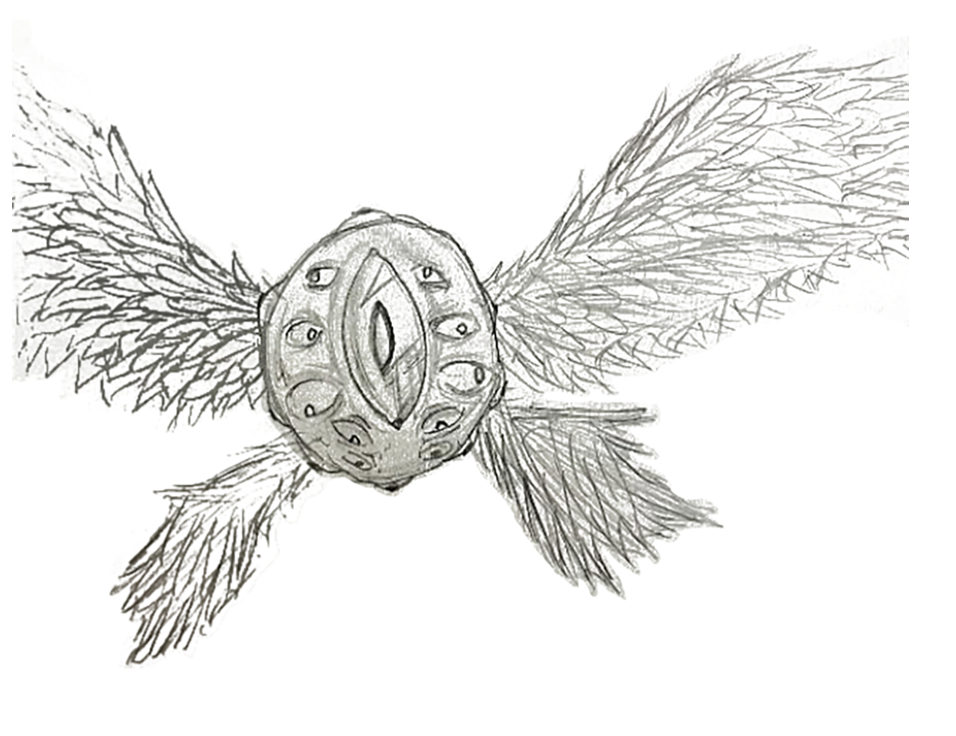
On Sunday, December 14, 2025, I gave a mini-sermon at Shalom Community Church. This is an adaptation of the mini-sermon. Here is an audio version. It includes other mini-sermons from Jo Hatlem and Trevor Bechtel, as well as litanies and music.
Eight years ago, during Advent–on Wednesday, December 20th, 2017, to be precise–I met two “angels.”1
< Wed, Dec 20
It was a “best of times, worst of times” kind of situation. Ashley and I had been trying to get pregnant, for a second time. We had Leila, but we’d always known that, if possible, we wanted two or three children. With Leila, we got pregnant pretty quick, and so we were hopeful. We were keeping track of Ashley’s cycle and had a pregnancy test ready to use that Wednesday morning.
I also had a close friend, from when I lived in North Carolina–a mentor, a father figure–who was in the hospital. His name was Calvin. Over Thanksgiving break, he’d gone to visit family in Maryland and he’d had a stroke, a bad one, in his brain stem. It eventually left him in a “locked in” state: he was conscious, at least intermittently, but unable to move or speak. He could only communicate by blinking his eyes.
He had family with him in Maryland; and some mutual friends of ours helped take care of his house in North Carolina. Meanwhile, I felt pretty useless here in Michigan, but I’d made tentative plans to go visit him over the winter break.
Wed, Dec 20
That morning–the Wednesday morning, before work–Ashley took the test, and it was positive! And we were excited! Already, our minds started racing, thinking about this new adventure we were going on, and sharing it together.
Perfect for a season celebrating the birth of a baby.
And then, right then, not 10 minutes later, I got some sad news. Calvin, my friend, had passed away. He was 56. And I was devastated. I tried to be excited about the pregnancy, even if just for Ashley’s sake. But I couldn’t. All I could do was get in the shower and cry.
> Wed, Dec 20
Instead of visiting him that winter break, I went to his funeral. It was open casket, and I remember he was wearing this suit, with a purple shirt and tie.2 And on the program for the funeral there was a picture of him, wearing that same suit–alive (smiling even)–but photoshopped onto a cloudy sky, with a kind of halo. It had very “heaven got another angel” or “he’s in a better place” type vibes. It was well-intentioned, and probably standard practice. But in the middle of grieving, it just made the pain worse, like I was somehow supposed to ignore the reality staring back at me. That he was gone.
A few weeks later, Ashley went to her initial prenatal visit, in February; she was 10 or 11 weeks pregnant by then. She was healthy, and everything seemed to be moving along just fine. And besides, we were old hands by this point. We were definitely doing that thing that Anita talked about last week: imagining what this child’s life was going to be like.
Except, at the appointment, when nurses “listened” for a heartbeat, they weren’t able to fine it. Neither were doctors. An ultrasound a few days later revealed that Ashley had had a miscarriage. We officially had what other people would call an “angel baby.”
Ashley hadn’t had any obvious symptoms that something concerning might be going on–certainly not a miscarriage–and so the whole thing was a shock. But we are problem-solvers, and jumped right into action. After a missed miscarriage, the doctor gives a woman options for removing the fetal tissue. Ashley had a really difficult time with this, and said recently that it was like picking which of these awful things was the LEAST awful. In the end, she just wanted to get it out as quickly as possible, and so we made an appointment to do just that a few days later. I woke up that morning, went to work (and cried in the stacks). The appointment, when it came that afternoon, was over really quick. The doctor was funny, which is a distraction technique.
That evening, Cinda, a Shalom friend, brought us soup.
In the days before and after, I remember people telling us to BE THANKFUL that we had Leila. And that we could try again. And that “actually, it’s very common.” (This kind of advice is all over the Internet.) And we WERE (thankful) and of course we KNEW all that. But, again, it was like people just didn’t want you to LOOK at the thing.
And so yeah, it ended up being a “worst of times, worst of times” kind of situation. And for a very long time I was convinced that nothing good was ever going to come of that day.
I See Words
I’ll admit that I am basically allergic to the modern, “Disneyfied” versions of angels that are often offered to us as comfort here in the West, as they were when Calvin died, and as they were when Ashley experienced a miscarriage. For the record: I don’t want them at my funeral.
Partly, it’s Biblical. Angels, like the ones we meet in Advent, and throughout scripture, aren’t actually all that comforting. Sometimes they are even scary. They totally UPEND individuals’ lives, and they are HERALDS of disruption and reorientation for ALL of humanity, especially for those who don’t look like us (and against those who do).
It’s also the way they FUNCTION in society.
The angel Gabriel, according to... Luke, burst into the life of an ordinary young woman[--Mary--]without permission, terrifying her." Gabriel had just done the same thing to Zechariah, so that he was "troubled and overcome with fear."
He even became mute… like my friend.3
"Every angelic appearance in scripture causes fear, because the angel mediates the SEARING INTRUSTION of the LIVING GOD..."
These experiences taught me that even though I act like I’m not, or hide it when I am, I am afraid. I am afraid of losing people I love. Of being alone, or left behind.4
Yet the angel said, "do not be afraid."
Maybe I really was visited by angels that season. I don’t think so. My life was changed, though, and my orientation–especially toward grief and our responsibility to ourselves and others in life’s WORST moments–in ways that I am still coming to understand.
But you don’t get to this hope, this reassurance to NOT to be afraid–which is not just something we hear during Advent, BTW, but something that echoes throughout scripture–by rushing ahead. Or by pretending like it’s not there. Or by relying on cheap optimism about a distant or heavenly future. Or by believing that grief can somehow–like MAGIC–be fixed, or go away.
You don’t–you can’t–pretend that suffering and loss don’t exist here and now when you’re looking at your friend in a coffin or trying to help your wife after a miscarriage.
A Man Walking with His GirlFriend (Advent) Is Distracted By a Woman in a Red Dress (Christmas)
I love Advent, but there’s a lot at stake with the promise of Advent. That a baby will be born. Not that time. That when Christ comes again, “death will be no more.”5 Not yet. This kind of thing only works if you take the LLLOOONNNGGG view. In reality, Advent is a kind of optimism, but “optimism with a broken heart.”6 There were two mass shootings yesterday. Any talk of peace, or hope, or joy… they are FRAGILE and TENTATIVE at best.
But the promise of Christmas is, by comparison, much simpler. One that Jo has reminded us of a few times this Advent, and one that I can get behind. That God is with us. Period. Celebrates with us, suffers with us, abides with us, through it all. And that your life can and will be transformed, like it or not.
Amen.
Categories: talks
-
A basic premise of this mini-sermon is something Steven King once said: “telling an alcoholic to control his drinking is like telling a guy suffering the world’s most cataclysmic case of diarrhea to control his shitting.” I think the same is true for telling someone who suffers from anxiety not to be anxious, or telling someone who is afraid–ahem, angels–not to be afraid. ↩
-
Also his hands. They were deflated, and they didn’t look like his. ↩
-
Bible ↩
-
Fleming Rutledge, The Once and Future Coming of Jesus Christ ↩
-
Bible ↩
-
Nick Cave ↩